Four centuries of power, greed and the people who made their stories into history — from the court of Elizabeth I to the drawing rooms of Hitler’s Europe.
Travel back in time1558 – 1945
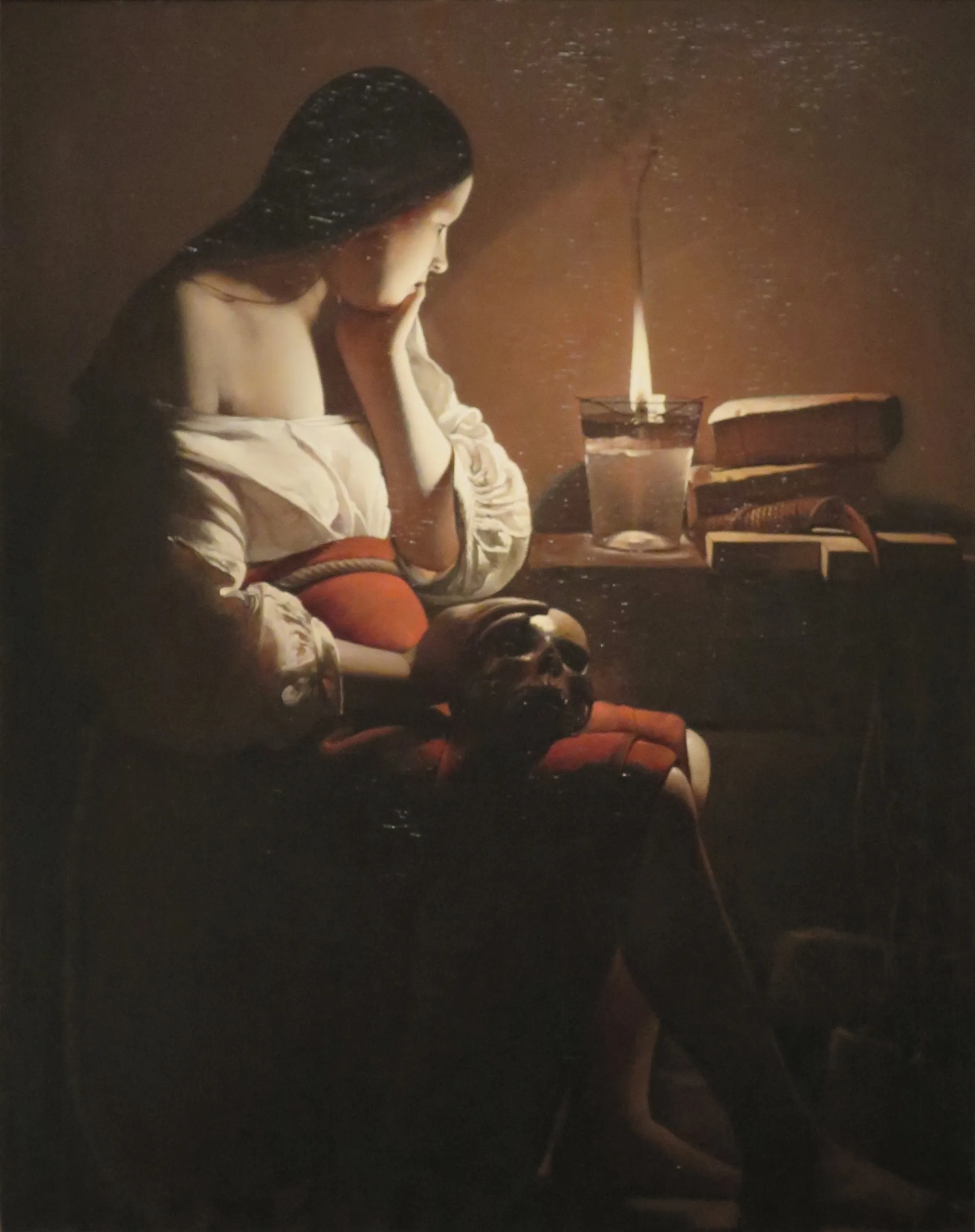
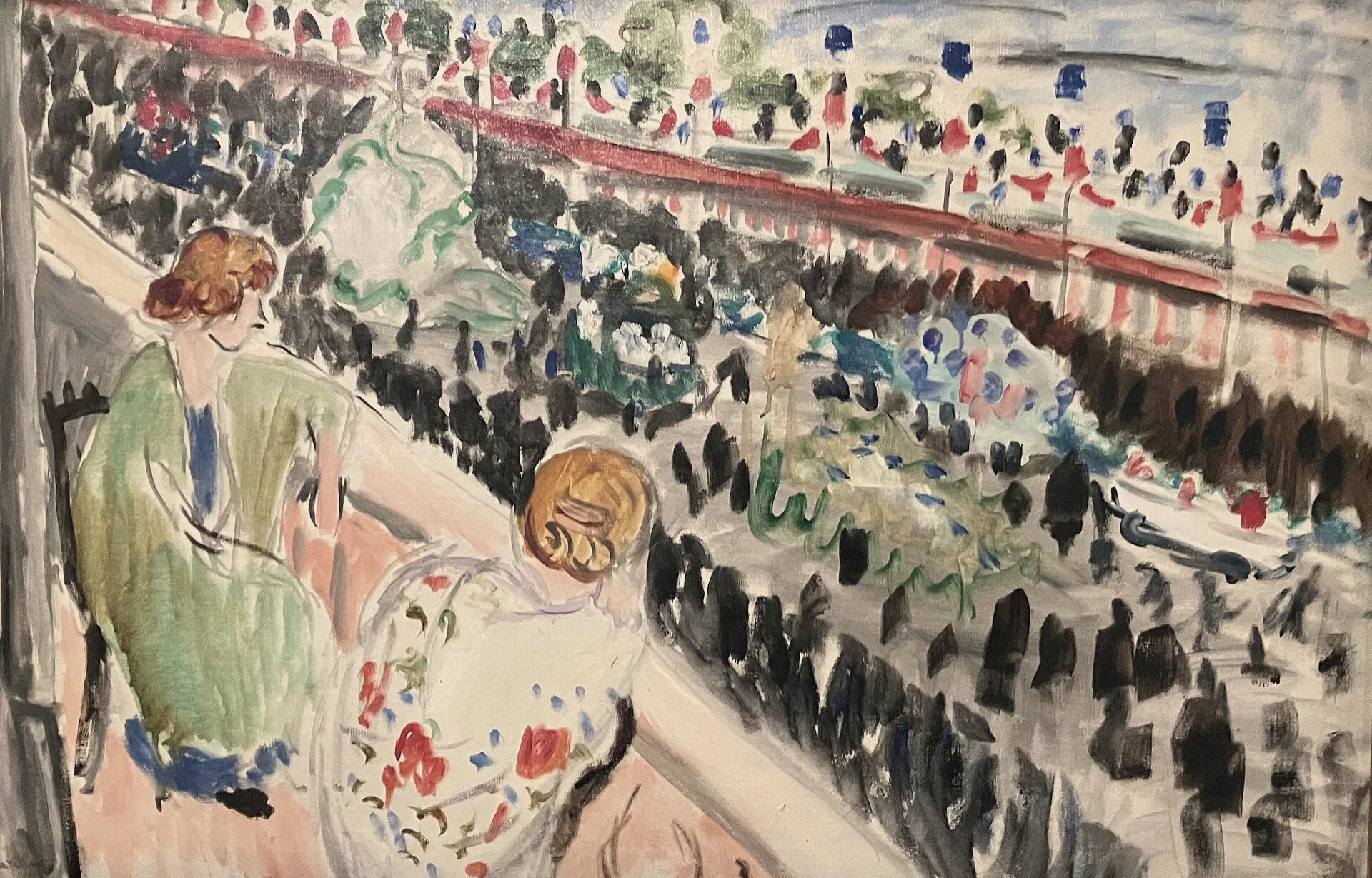
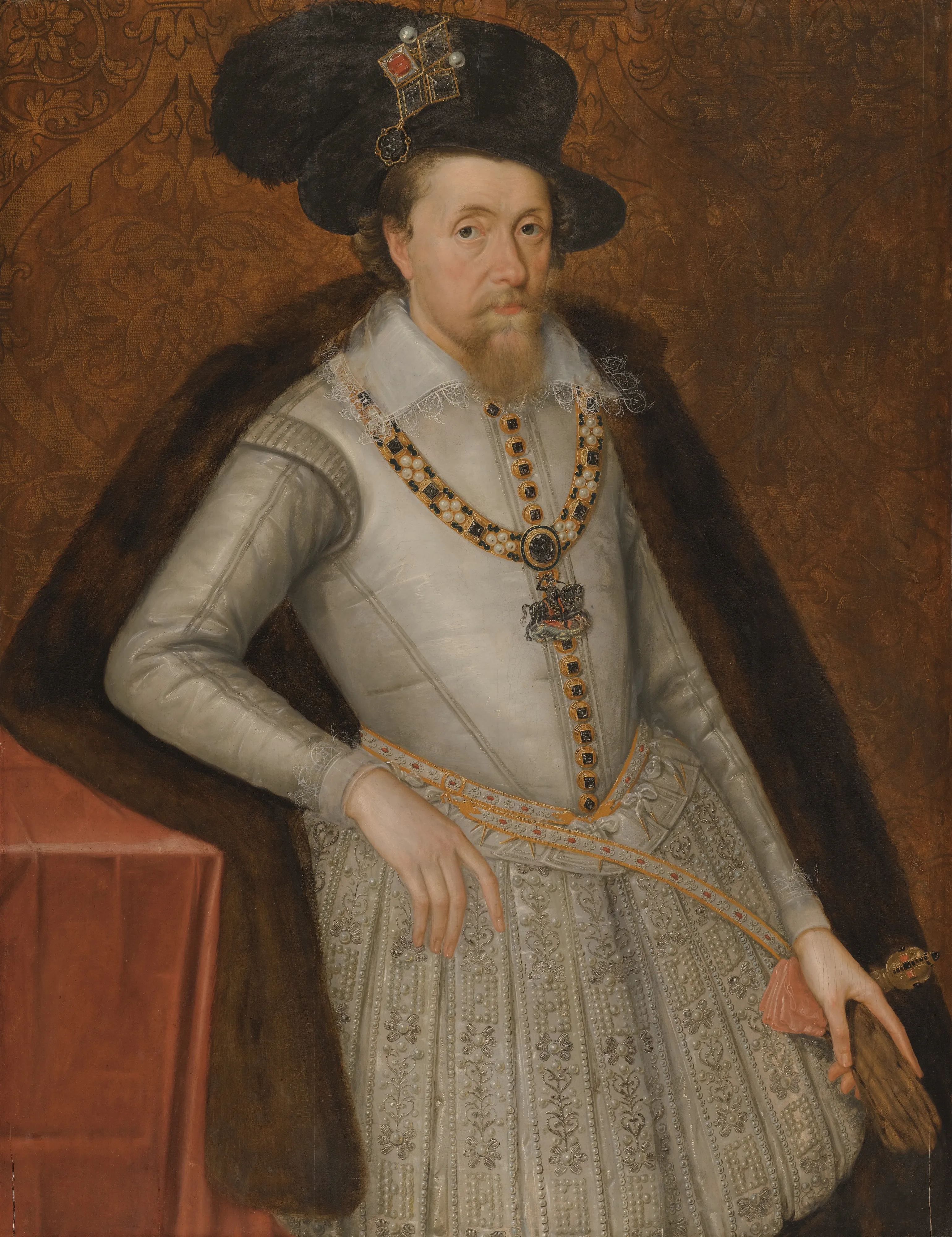
Cat. 00 — Georges de La TourThe Magdalen with the Smoking Flame, c.1640
NEW · A NOVEL · 1615
Much Ado About Will
Lent, 1615. Will Shakespeare’s ‘sensible’ daughter steals her father’s plays, flees her cheating husband and her lying mother, and sets off for London. A Shakespearean road trip, more or less.
Hildebrand Gurlitt looted in the name of the Third Reich, deceived the Monuments Men, and left a hidden art treasure trove in a Swiss bank vault and Munich flat.
Absolutely gripping from start to finish… Everyone should read this book.
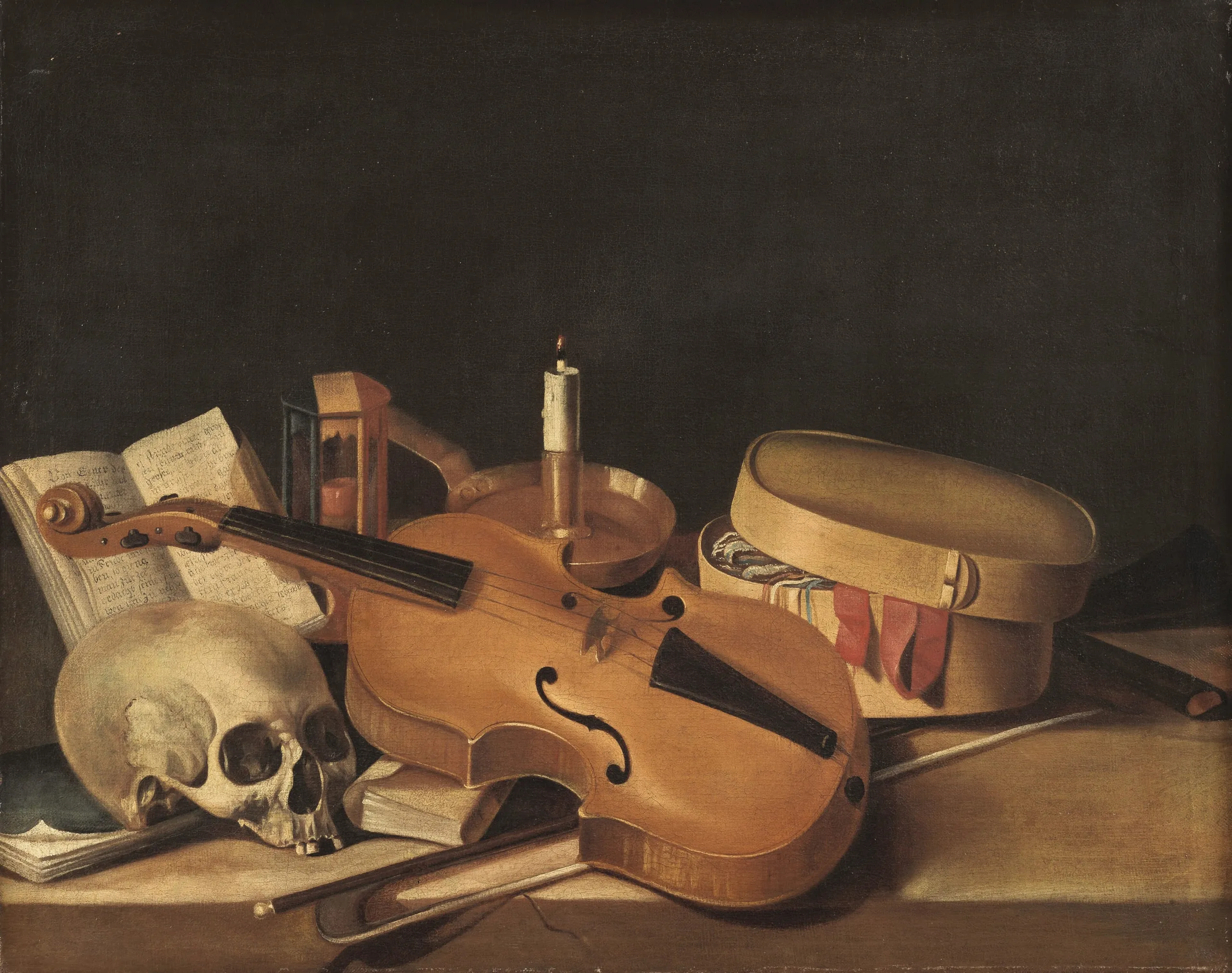
Cat. 09 — Vanitas still lifeAttributed to Franz Friedrich Franck, 17th century · Public domain
Prologue
London, May 13, 1937
The German embassy’s celebrations for the Coronation of King George VI had been six months in meticulous preparation. And, now their best-laid plans had gone awry through an anti-German conspiracy cooked up by Jews and Freemasons, the tall, fair-haired German ambassador to the Court of St. James’s, Joachim von Ribbentrop, asserted. It should have been Edward VIII’s coronation, and Ribbentrop would never forgive Germany’s enemies for making them celebrate the coronation of the wrong king. Germany had lost its most valuable ally Ribbentrop repeatedly told his aides. “Don’t you know what expectations the Führer has placed on the King’s [Edward’s] support in the coming negotiations?” an imperious Ribbentrop bemoaned to his secretary Fritz Hesse shortly after Edward’s abdication in December 1936. Everything that Hitler had worked for depended on an agreement with Great Britain. Ribbentrop would write to Hitler that, “Seldom in history has greater baseness been shown than by the circles around Edward VIII whose work finally led to his being deprived of the English throne.”
Ribbentrop had been dubbed “Ambassador Brickendrop” by the British press for giving the Nazi salute when he presented his credentials to Edward on October 30, 1936. He repeated his Hitlergrüsse to George VI, but this time, there were other ambassadors present, like the malevolent Frenchman, Charles Corbin. Ribbentrop indignantly resented the untrue stain on his reputation, claiming that he had fallen backwards and not given the Hitler salute. Then, within two months of his arrival in London, having assured Hitler that he was the Anglo-Saxon expert in the Nazi hierarchy, Edward abdicated. The führer’s other eyes and ears in London, Princess Stephanie zu Hohenlohe-Waldenburg-Schillingsfürst, Hitler’s liebe Prinzessin, had warned Hitler that Ribbentrop had misunderstood the situation. The ambassador’s rancor towards the princess for contradicting him knew no bounds.
Ribbentrop had advised his führer that Edward VIII was a “strong man intent on bringing his country into line with Germany.” When the king announced he was giving up his throne for the woman he loved, Ribbentrop felt duty bound to dispel the myth. And so, Ribbentrop’s December 10, 1936 dispatch regarding the abdication stressed “a systematic agitation has been fomented in Britain against the King…his friendly attitude towards Germany had undoubtedly gained the King very powerful enemies in this country.” As soon as Ribbentrop returned to Berlin for Christmas, he repeated the allegations that Edward had been deposed by “an anti-German conspiracy of Jews, Freemasons and divers reactionaries.”
And now there was this undue agitation over Hitler’s liebe Prinzessin, that upstart Hohenlohe woman*.* True, Princess Stephanie zu Hohenlohe-Waldenburg-Schillingsfürst was no more of royal Hohenlohe blood than Ribbentrop’s title was genuine, though the ambassador would hardly make such a disagreeable comparison. But the princess was under the protection of Hitler’s personal adjutant and former company commander from the Great War, Captain Fritz Wiedemann. For Ribbentrop, the unanswered question was whether Wiedemann protected Princess Stephanie for his own reasons, Dr. Goebbels’ whom he served at the 1933 Chicago World’s Fair, or for Hitler’s?
Ribbentrop fumed each time he thought about this ersatz princess. Was he not the German ambassador? Was he not Hitler’s trusted eyes and ears in all matters relating to the British and other Anglo-Saxon nations? Could he not determine who should or should not be invited to the official celebrations? Ribbentrop had challenged his führer’s insistence on her presence by stating categorically that none of the British aristocrats would attend if Princess Stephanie were present. All those in the British government thought she was an adventuress, and they would boycott the celebrations, too. Would it not be a faux-pas, he asked Hitler, to court social disaster when the previous king—who played golf with Princess Stephanie—had so divided the country? Alas, for Ribbentrop, it seemed not. He had crossed her name off the guestlist once. Wiedemann, on Hitler’s orders, sent a telegram reinstating her. It rankled with Ribbentrop, so he ignored the order. When Stephanie advised Wiedemann that her invitation had not arrived, Wiedemann ensured that the führer himself sent a cable ordering his dear princess’s attendance. Ribbentrop, ever petty and vindictive, only had one recourse left open to him: he would guarantee that Stephanie’s name would be expunged from the Court Circular in The Times.
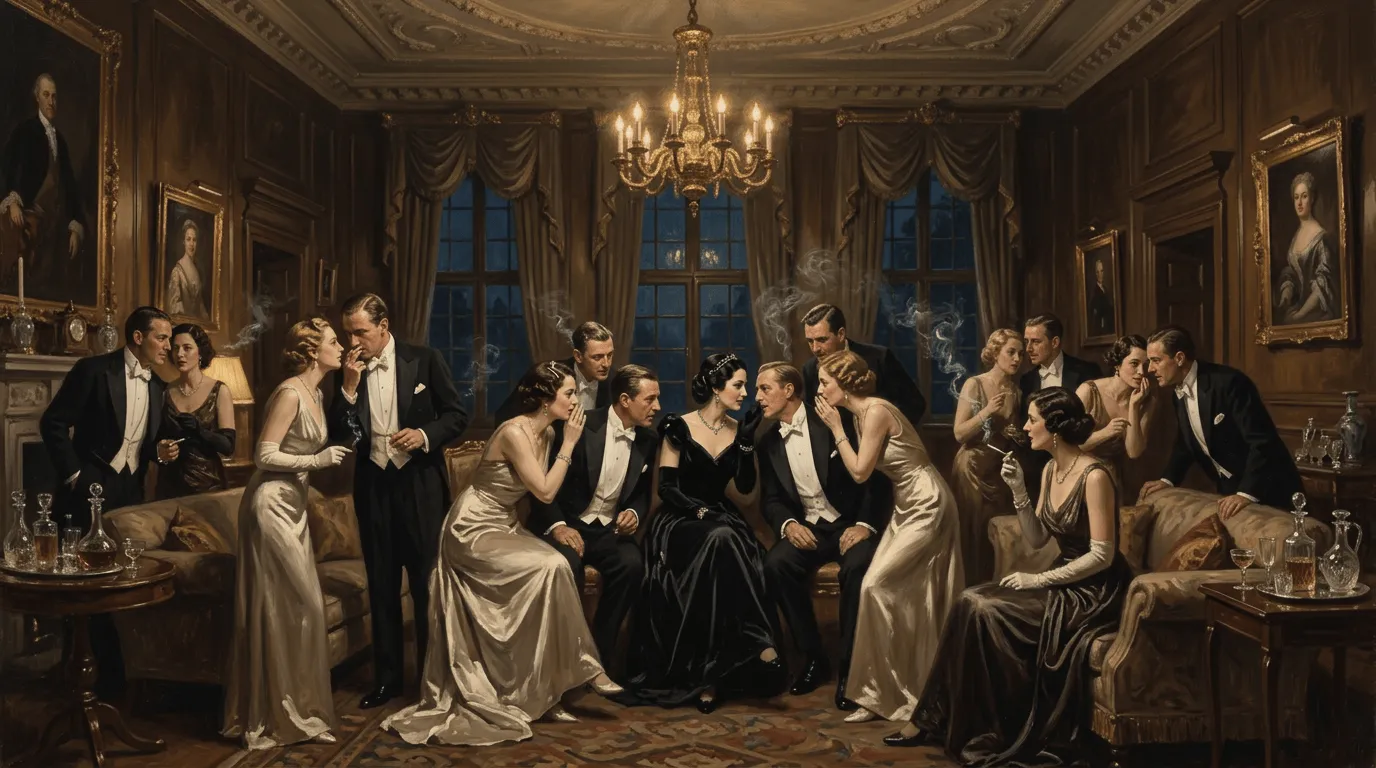
And so, on the evening of May 13, Stephanie, looking every inch the born-and-bred princess—Titian-haired, voluptuous, radiant, bejeweled, and wearing the designer Molyneux’s most sumptuously beaded gown—entered the crowded German embassy ballroom on the arm of the rather tall and good-looking Captain Fritz Wiedemann. The San Francisco-born hostess Lady Maud “Emerald” Cunard rushed over to embrace her dear friend and Ribbentrop’s nemesis princess. As Stephanie made her way through the throng of the great and good of many nations, bowing her head regally in response to the welcoming gazes of her fellow foreign nobility, she acknowledged Lady Nancy Astor’s wave with smiling eyes. Lord and Lady Londonderry shook her hand warmly. Of course, Lord Rothermere—Stephanie’s employer of many years— motioned for her to join him and the other press barons, Lord Kemsley and his brother Lord Camrose. She saw Churchill, hunched over with a cigar in his mouth and whisky glass in his hand glaring at her. She pretended to ignore his gaze. Stephanie would not be deterred from approaching the object of her quest.
“I could see that she was greeted wholeheartedly from all sides and accepted everywhere as belonging to ‘high society,’” Wiedemann wrote later. “Cleverly she knew, before the eyes of all those present, to approach the Duke of Kent, who politely rose from his chair and chatted with her animatedly for some minutes.” Prince George, Duke of Kent, was the youngest son of George V, and youngest brother of “Bertie” the new King George VI. Later, Stephanie enthused to Wiedemann, “Did you see, Fritz, twice he jumped up from his chair when I addressed him.”
Stephanie Hohenlohe was no one’s fool. She may have married into the Continental aristocracy by stealth, but in greeting her old friend—and the reception’s guest of honor—in such a manner was a stab in the back for Ribbentrop. With General von Blomberg only a hair’s breadth away from the Duke of Kent, the message would have gone back direct to Hitler from an unimpeachable source, that Princess Stephanie was indeed an old friend of the British royal family. She was sure, too, that von Blomberg witnessed the warmth with which Prince Otto von Bismarck (grandson of the great unifier of Germany in 1871) and his wife embraced her. At a stroke, Ribbentrop was defeated, and Stephanie had asserted her place one again as Hitler’s “Dear Princess.” But who was this Princess Stephanie Hohenlohe? And why was she so precious to Hitler?
Tuesday, October 22, 1940
On the same day Adolf Hitler traveled south to the French border with Spain for talks with Generalissimo Francisco Franco, U.S. Ambassador Joseph Patrick Kennedy bid his farewells to senior members of his team at the American Embassy in London. As staffers shuffled out of the ambassador’s office, some were dabbing tears from their eyes while others sported half-hidden, sly smiles. Despite their differences of opinion about the ambassador, each one recognized that it was the end of a turbulent era of American diplomacy in Europe. In his two years and seven months in England, Joe Kennedy had been taken to the peoples’ hearts, then widely loathed. From the outset, he was feared and deemed insufferable by both the White House and the State Department.
When Kennedy stepped out onto Grosvenor Square for the last time, the ever-present, international newshounds barked: What will you do now, Mr. Ambassador? Uncharacteristically, Kennedy merely smiled. Standing ramrod tall in his homburg and overcoat, perhaps some pounds thinner than his normal svelte self, the press generally remarked that old Joe wore a somber, even sullen face. Some mistook it as regret at being recalled “for consultation” by President Franklin D. Roosevelt. But this was no recall. And there were scores of people who knew it. Joe Kennedy was going home to put FDR out of a job.
Predictably, photographers begged the ambassador to turn this way and that. Jim Seymour, one of Kennedy’s stalwart Hollywood friends, was asked to shake his boss’s hand one last time for the cameras. Flanked on his right by his most private Mister Fix-It, “London Jack” Kennedy, the ambassador obeyed, seething. Minutes earlier, Kennedy’s press handler, Harvey Klemmer, gave him a final warning: “For Heaven’s sake do not say anything before you see Roosevelt at the White House, for if you do, it will mean, politically, gravely damaging things.” So, Joe hung onto his quick Irish temper and thought of his sons’ futures.
Then, the throng unexpectedly parted, making way for the giant figure of Prince Monolulu—the feted horseracing tipster wearing his ostrich feathered crown, black and gold waistcoat, multicolor silk trousers and matching frockcoat. Monolulu bellowed in a deep, honey-coated voice his famous strapline, “I have a horse….” The photographers snapped away while Monolulu whispered to Kennedy the name of his favorite thoroughbred running that day. Of course, the ambassador had made use of Monolulu’s tips during his leisure time at the races with England’s ruling elite. So, Joe gave Monolulu a smile, not quite hiding his irritability. When Kennedy turned away from the embassy, he also left behind the pinnacle of his public service career.
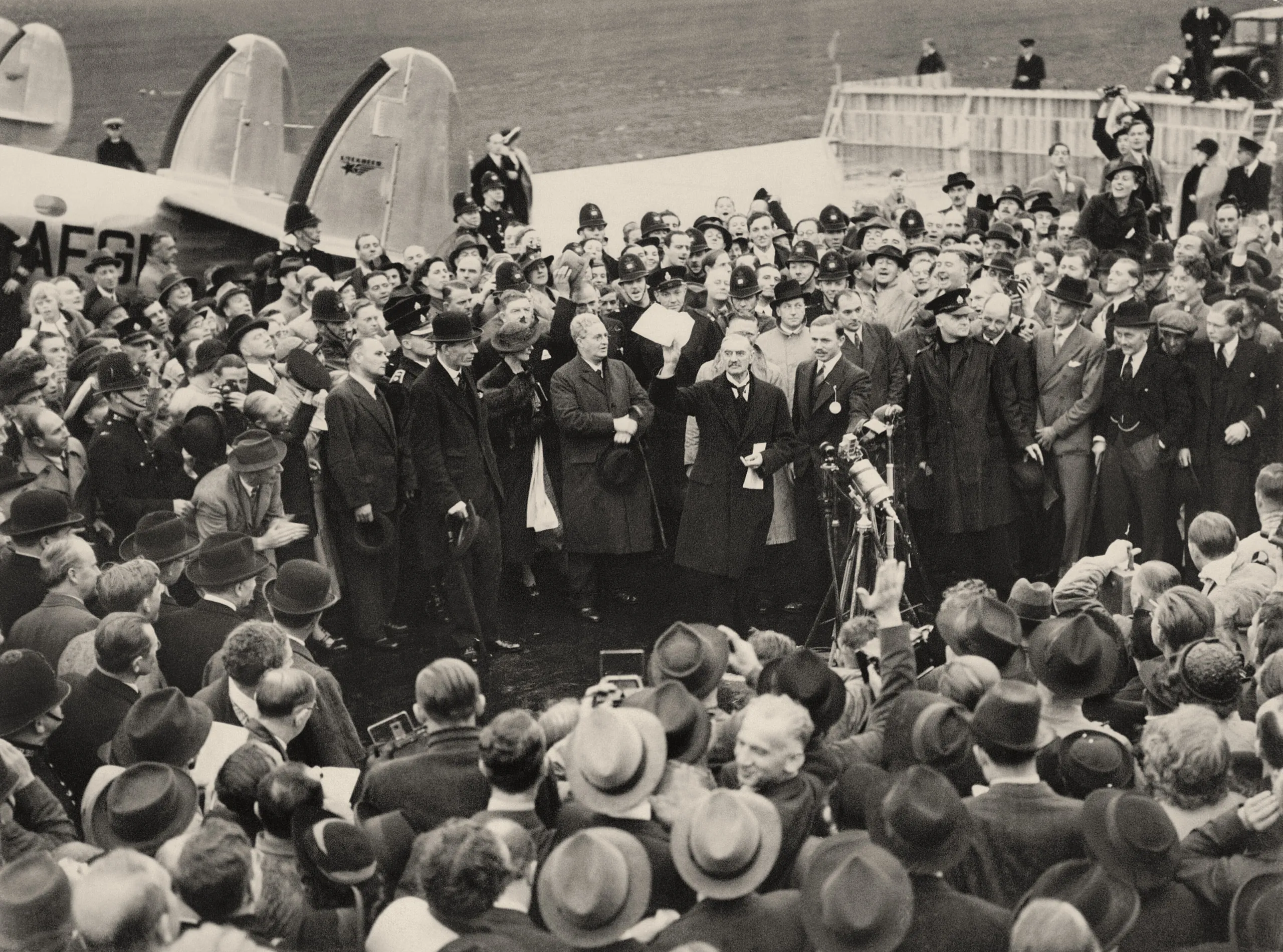
But Joe Kennedy was both bitter and aggrieved. Everything had changed since his arrival in Great Britain on March 1, 1938. Former Prime Minister Neville Chamberlain, Kennedy’s great friend, was dying. Winston Churchill, who Kennedy never trusted, had become prime minister instead on May 10, 1940. Joe had made acres of friends in high places. Then, he lost the esteem of all but a select few. The ambassador had a long memory, particularly when it came to grudges, and would never forgive Churchill, who in Joe’s opinion, had laid his military blunder in Norway that April at Chamberlain’s feet. Just the same, as Kennedy was driven south to Bournemouth in thickening fog to catch his clipper flight home, he never thought that the brickbats hurled at him by the British predated Churchill’s rise by over a year. Undoubtedly, the shots that stung the most came from the big guns of the White House and the U.S. State Department.
By October 1940, Kennedy’s outrage was aimed at the two-term Democrat, President Franklin D. Roosevelt, for how shabbily he had treated his ambassador to the Court of St. James’s. Joe was determined to wreak his revenge on the president’s bid for a third term in just ten days’ time by urging everyone to vote for the Republican candidate, Wendell Willkie. Months earlier, Joe had told Clare Boothe Luce—his lover and wife of publisher Henry R. Luce of Time, Fortune, and Life—what he planned to do. While Clare soothed his ruffled brow, Joe might have forgotten that she was a die-hard Republican and could have had an ulterior motive in fueling his flames of indignation against the president.
And yet, Kennedy’s wife, Rose, had written to her husband a few weeks earlier that she wanted to tell Roosevelt she would “guarantee to chloroform you [Joe] until after the election.” This is the true story of Joe Kennedy’s rise to the pinnacle of his public service career as U.S. Ambassador to the Court of St. James’s in London and his fall from grace.
The Ringmaster—1919
Condé Nast might have wondered why a publisher should feel like the ringmaster of a circus that would put Ringling Brothers and Barnum & Bailey’s to shame. True, he aimed to create the “most excellent and stunning greatest show,” albeit in the publishing world. Did that mean he was expected to tame and shackle his employees to prevent them acting as wild animals? He was discomfited by the image racing through his mind as he flicked a whip at his staff like some lion tamer. The forty-six-year-old Nast was still deemed handsome with his even features and slightly receding hairline, if a bit bankerish with his wire-rimmed pince-nez and immaculately tailored three-piece suits. He was a quiet, reflective sort of chap, never garrulous, or given to outbursts of bad temper. He was noted for his measured, gentlemanly manner, his numeracy, and his careful management style. Those who didn’t know him well thought he was stand-offish. Others were floored by his incredible eye for detail. Above all, Condé was painfully shy and always mindful of his coveted place in New York high society. But a lion tamer? Never….
Of course, he wanted the best in every field—illustrators, photographers, designers, writers, layout people, editors, and even advertisers. How else could he craft the best publications? Why even his dear friend and editor-in-chief at Vanity Fair, Frank Crowninshield—everyone’s favorite raconteur—was guilty of hijinks, not to mention poaching top talent from Condé’s cash cow, the highly successful Vogue.
As far back as the spring of 1915, Edna Woolman Chase, Condé’s editor-in-chief at Vogue, complained that Frank had his eye on “a small dark-haired pixie, treacle-sweet of tongue but vinegar-witted” who was working on captions and special features. One of her first pieces was about houses, Condé recalled, and was cleverly entitled “Interior Desecration.” It made a fair few avant-garde interior designers turn away in shame. This woman was courageous, too. She even dared to become a lab rat for her feature article “Life on a Permanent Wave”—when the hair perm was still hazardous and took an entire day hooked up to electric heated rods after the hair was soaked in a reagent (usually cow urine and water or caustic soda) to show results. The pixie’s name was Dorothy Rothschild. Within the year, she became Dorothy Parker.
Condé had to smile at the memory. Of course, Dorothy was too witty to remain the writer of special features and punchy one-liners like “From these foundations of the autumn wardrobe, one may learn that brevity is the soul of lingerie.” At times, she borrowed from nursery rhymes, like when she hoped to tweak the noses of Vogue readers in writing: “There was a little girl who had a little curl, right in the middle of her forehead. When she was good she was very very good, and when she was bad she wore this divine nightdress of rose-colored mousseline de soie, trimmed with frothy Valenciennes lace.” The suggestion that Vogue readers might actually have sex was an anathema to the Palm Beach and Newport sets, and the offending quip was deleted at the proof stage.
Although Vanity Fair’s editor, Frank Crowninshield, (called “Crownie” by his staff and close friends,) was the quintessential Edwardian gentleman, he was the first to truly admire Dorothy’s way with words. So, he duly poached the little, quiet, seemingly unassuming, lass from Vogue. What else could he do? He adored her humor, and together with George Shepard Chappell, they wrote in 1915, High Society: Advice to Social Campaigning and Hints on the Management of Dowagers, Dinners, Debutantes, Dances and the Thousand and One Diversions of Persons of Quality…. Their entertaining jests were illustrated by the pen and ink drawings of Anne Harriet Fish, the internationally famous artist for The Tatler and Vanity Fair in London. Born in Bristol England, “Fish” as she was known to every witty household, was adored on both sides of the Atlantic. Still, Fish wasn’t the problem in managing his circus, Condé ruminated.
On her own, perhaps Dorothy hadn’t been at fault? Then Condé thought back to his private assistant, Albert Lee, and his daily, almost religious, tracking of the allied forces in the Great War on a huge map of France taped to the office wall. Lee painstakingly set the battle lines in colored pins back and forth across no-man’s-land as reported daily in The New York Times. (Just how he charted the infinitesimal movements by the yard, meter, or foot is anyone’s guess.) Being an inveterate biter of the hand that tossed her tasty morsels to write about, Dorothy taunted the poor man by dashing into Vogue’s offices early in the morning, and devotedly rearranging Lee’s weary armies. While he eventually suspected that German spies had invaded Vogue, Frank pounced like any decent predator, and enticed Dorothy to soar under his wing, proclaiming, “her perceptions were so sure, her judgment so unerring, that she always seemed to hit the centre of the mark.”
The fact was Frank adored practical jokes, too. An arch-player of many pranks, he had rather notoriously—and repeatedly—tied black thread to the legs of chairs in the guest bedrooms of country mansions where he was staying, then slipped the end of the thread out the bedroom door. When its occupant prepared for bed, the chairs would suddenly move, causing its mystified resident to either swear off alcohol or believe that the house was haunted.
It should have come as no surprise to Condé that Frank encouraged Dorothy’s antics. Life at Vanity Fair was more akin to a kindergarten than editorial offices, except of course, for the crap games. Why Frank even proudly called his private office as “a combined club, vocal studio, crap game, dance-hall, sleeping lounge and snack bar.” Its very informality bred the utter chaos on which the magazine mysteriously thrived. Crowninshield was a serial ignorer of the old publishing cliché, Remember, there’s an old lady sitting in Dubuque, and she has to be able to understand everything we print. (Don’t worry citizens of Dubuque, you’ve been replaced by Fresno for some reason). He introduced America to modern art and artists like Pablo Picasso and Henri Matisse, as well as modern women writers like Colette and Dorothy Parker. A New York club man par excellence, Frank was one of the founders of the Coffee House, an antidote to the stuffy—but necessary—Knickerbocker Club.
Despite Frank’s inclination to mirth, Condé reflected, the issue was not with his friend, nor Dorothy. It was that wisecracking cocktail of a trio he had hired at Vanity Fair: Dorothy Parker, Robert Benchley and that gentle beanpole of a man, Robert Sherwood. What lunacy possessed him to hire Benchley as his managing editor? Did he believe Benchley might feel some responsibility to write those “serious” articles at Vanity Fair as originally promised? Condé had been fooled by Benchley’s Boy Scout appearance and good manners, his sandy—if thinning—hair, pale blue eyes, serviceable suits hot off the racks at Rogers Peet, and, naturally, his sensible galoshes. Benchley didn’t swear, smoke or drink back then either. He was married and lived in Westchester with his wife and young son. As for Sherwood, nicknamed “Sherry,” Condé should have known that anyone that tall—six-foot-seven in his stocking feet—who wore his straw hat at such a jaunty angle, would be trouble.
Can you hear Condé’s sigh across the past century? Well, Benchley’s pledged “serious” articles that got him the job in the first place turned out to depict the funereal world of the undertaker. And why should Benchley’s hobby for the gruesome, if practical, netherworld been taken up quite so enthusiastically by Dorothy? It added insult to injury that Condé Nast Publications paid for Benchley’s subscriptions to their macabre reading—Casket and Sunnyside magazines. Sunnyside had, according to Dorothy, a joke column called—steel yourself now—“From Grave to Gay” (how is that possible?) that particularly tickled her fancy. “I cut out a picture from one of them, in color,” Dorothy recalled, “of how and where to inject embalming fluid, and hung it over my desk until Mr. Crowninshield asked me if I could possibly take it down. Mr. Crowninshield was a lovely man, but puzzled.” Puzzled? Actually, Frank recalled that there was a ghastly parade of color photos of cadavers in various states of preparedness for the grave and ordered Dorothy to take them down. Perhaps she could replace them with prints by the artist Marie Laurencin instead, he suggested?
Bluntly put, both Condé and Frank thought the trio’s daily imbroglios and prolonged lunch hours at Child’s Restaurant had become too routine and must stop. Dorothy herself would write later that they were behaving “extremely badly.” So, the long-suffering Condé asked his vice-president, Francis Lewis Wurzburg, to strictly enforce the company’s code of punctuality. Everyone, without exception to rank or talent, must comply. The tenderhearted, loyal Wurzburg obliged, sending around a memo that all employees were to be at their desks at nine o’clock sharp. That meant, at their desks. Not chatting in the corridors. Not loitering in the cloakrooms. Cards, the size of normal playing cards, were dutifully printed and handed out to would-be offenders, demanding that they state their reasons for their tardiness.
Benchley was the first to fall foul. Arriving eleven and a half minutes late, he found the card neatly placed on his desk. Applying himself to the task with vigor, Benchley rolled up his sleeves and began writing his sorrowful tale for the missing eleven and a half minutes. Wasn’t the office deafened by the roar of the Hippodrome’s elephants as they broke loose shortly before nine a.m. that morning? “A clutch, a gaggle, a veritable herd of elephants came trumpeting from the Hippodrome, shouldering their way through Forty-fourth Street” and rampaging across Sixth Avenue. “Frantic guards came rushing after them, pressing all passing civilians into a posse to help in the round-up.” It was worse than herding cats at a crossroads, Benchley plowed on. “The first thing I knew I had been swept up to West Seventy-Second Street,” Benchley wrote. “Some of the animals had been trapped; others were still at large.” Just imagine the pandemonium, Benchley exclaimed in ever smaller lettering curling around the edges of the card. Down they went to West End Avenue and the Hudson River docks, where the elephants tried to “board the boats of the Fall River Line” before they were finally herded back “to the Hippodrome, thereby averting a major marine disaster but unfortunately causing him to be eleven minutes late for work.”
If Condé blamed himself for their shenanigans, he was selling himself short. He was a pioneer, a visionary, a prospector who had found gold in promoting the “New Woman.” Since the 1890s the New Woman adorned the pages of novels in Europe and North America as sports-loving, defiant, intelligent, an original modern vision of feminism, equal to any man working in offices, factories, and workshops. It was she who demanded social and political reform, and the right to vote.
Condé was the first to bring European style, culture, and the modern arts to America with each issue of his publications, widening the country’s horizons from its parochial perspectives. He had broken the glass ceiling by promoting Edna Woolman Chase—a woman of no experience from an assistant gopher to top management. That’s something most employers still fail to do today. Soon enough, he would be credited with creating the café society; throwing the most awesome parties; finding young, untested talent from the international stage who would change the way we think; becoming one of the foremost Americans influencing the export of the country’s can-do attitude, know-how, products, fashion, and style to the world. He wrote the first paycheck ever for the British playwright Noel Coward. Aldous Huxley, Compton Mackenzie and P.G. “Plum” Wodehouse were on his staff. He was the first to publish Edna St. Vincent Millay (writing as Nancy Boyd), Donald Ogden Stewart, Robert Benchley, Dorothy Parker, e.e. cummings, and many more in any magazine. Condé was also a high-tech pioneer—promoting cutting-edge technologies in photography and printing, making them a byword for all that was modern.
So, what did it matter that he had left Benchley in charge of Vanity Fair, assisted by Dorothy and Sherwood, while he and Frank swanned off to Europe for two months? So what if Edna was also journeying to England and beyond for Vogue at the same time? Worrying was part of his job and he couldn’t help but fret as their ship the Aquitania sailed toward Europe. It made him uncomfortable to leave the circus animals in charge of his greatest gift to fun-loving, hard-thinking New Yorkers, Vanity Fair. But, the Great War was over, and court must be paid to all those in France and Britain who had suffered so cruelly. A delay in their plans was, candidly, impossible. Besides, truthfully, what real damage could the trio do in a mere sixty days or two editions of Vanity Fair? Condé wasn’t an unfair man, and even if the battle lines had been drawn, for now, he must let them win the skirmish.
San Francisco
Never let the facts get in the way of a good story –
Mark Twain
“I ran for my life,” Florence often recalled with a shudder, “through two great walls of flames toward the bay.” She was only ten-years-old.
Recoiling from the memory, her trembling voice seemed to relive her absolute terror. Still, the actress in her had learned over many decades that her oft-repeated tale required a meaningful pause at this point. She had learned, too, that timing was essential to the telling of any good story. So, here, Florence would stop and touch her elegant jeweled fingers to the outsized, perfect, three-tiered pearl necklace caressing her throat. One by one, she held her audience spellbound with her fabulous green eyes. Florence understood instinctively that beauty, as well as money, was power; and she had both in abundance.
The date she remembered was Wednesday, April 18, 1906. The place, San Francisco. The time: 5:12 a.m. For those friends who hadn’t heard her story before, Florence willingly retold how she had survived the great and terrifying San Francisco earthquake, embellishing the many death-defying details they expected to hear. Her friends in France – and particularly in Paris – had never lived through such a seismic cataclysm. Oh, there had been wars: cannonades heard across France’s northern plains; death beyond imagining in the Great War – and of course the Nazi Occupation. Florence lived through these manmade upheavals in France, too, but the horror she described was the death of an entire city within minutes. Even the survivors of the Paris floods of 1910 could not comprehend such an instantaneous tear in the fabric of tens of thousands of lives. Only with the onset of the nuclear age, could those who hadn’t lived through a large earthquake begin to understand its swift devastation.
Florence’s first great badge of courage was the San Francisco earthquake, not that she needed any medal in her long and wildly-lived life. Perhaps it made her feel more American to tell tall-tales no one else could imagine. It certainly set her apart, like her American-tinged accent, that she cultivated despite a lifetime lived in France, speaking French. Being an American somehow made her grander, more significant – and Florence craved significance. That, along with her lust for phenomenal wealth and need to be loved were the driving forces behind who she was, and what she did. During her eighty-seven years of life, she would achieve all three ambitions. So what if the truth was often bent to her will? At the end of the day, she had the means to bend it, and her entourage came to expect and desire whatever enchantment she devised for their pleasure.
So, who was Florence? Born Florence Juliette Antoinette Lacaze in San Francisco on July 1, 1895, she would die in Cannes, France in 1983 as Florence Gould. In the intervening period, she was on the guest lists of Her Serene Highness Princess Grace of Monaco, French and American politicians, millionaires, and movie stars. She rubbed shoulders with the famous, artists, and seedy underworld characters who haunted every casino in Europe. Her life would become a rags-to-riches dream, if not a fairy tale, and she would host the glitterati, the literati, and those who preferred to live their lives in the shadows. Her story fires the imagination in a life “writ large.” From the time of the San Francisco earthquake, she seemed to be at the heart of some of the most chilling events of the twentieth century and proved time and again that she was a born survivor. She wielded power in a way only the super-rich and beautiful can do; unrepentant for, and unaware of the damage done to others. Nonetheless, once you were adopted as her friend, she became your generous benefactor. Her enemies soon discovered that she could be a formidable foe.
Florence lived her life through many mirrors of varying hues, with an unshakeable belief in her beauty, wit and charm. The truth, as for so many people with power, only existed as she chose to tell it; and the great San Francisco earthquake is a wonderful example of how she bent the truth to her will. Florence never made any allusions to the roaring of the quake or its immediate destructive effects. Nor did she describe the nauseating sulphur smells after the first two shocks; nor the horrid aftertaste in her mouth. How could she be so oblivious? Hadn’t she heard the family horses neighing and stomping in the stables, fearful of the seismic impending doom, as all the animals of the city did that morning? The simple reason for her unusual lack of observation was that Florence was in her bed, at home, presumably fast asleep when the terror struck.
So, how could she recall the quake’s thundering northward into the city, lifting and rolling everything in its path, leaving utter destruction in its wake? She hadn’t seen any buildings as they rose and fell in an unstoppable, destructive domino wave of brick and stone crashing back down to earth skewed, as if they were toys tossed carelessly from an infant’s cot. The great commercial palaces of the American West’s premier city were reduced to billowing clouds of rubble in seconds. Born in the Pacific beyond the Golden Gate, the earthquake sucked the waters from the bay, then rolled them back in with phenomenal force, spilling the ocean onto the streets of San Francisco. Enormous breakers far beyond a surfer’s craziest conjuring, pounded the city’s thoroughfares. . .
The Gurlitt saga began for me in 1998 on one of those heavily laden, bone-chilling winter days that curse Europe from late October to April. Back then, I was an investment banker specializing almost exclusively in the restoration of historic buildings and landscapes and their conversion to alternative use. To my knowledge, I was the only such independent beast in the licensed “banking community,” which made me as rare as a golden unicorn to some (or a proverbial dragon to others) and gave me a very minor “rock star” status. I recognized that I was able to see and know things and places most people could never glimpse. That said, I’d grown curmudgeonly and badly needed a change. I had no inkling that this would become one of the most significant days in my working life.
It was just another day trip to Zurich, like so many dozens of other day trips I had made in previous years. With a Swiss institutional shareholder, Zurich, Geneva, and Lausanne were familiar stomping grounds in the pursuit of bona fide investors. Snow threatened, and I was anxious to meet my prospective investor with his bank manager and swiftly take back proof of his ability to invest millions in the project I was currently working on before the storm broke.
My destination was one of the richest city blocks in the world—Bahnhofstrasse, home to the world’s premier banks and, more important, their moneyed clients from across the globe. Swiss bank-secrecy laws attracted the superrich and ultra-notorious alike—especially back then. Today, things are marginally different.
The meeting with the prospective investor and his personal bank manager went well, and as a final step for the day, it was necessary to go to the bank’s vault to verify the share certificates, certificates of deposit, jewels, and art. I was a thorough kicker of tires.
For those readers who have never seen one, there is something quite incredible about a Swiss bank vault. Each is a Pandora’s box in its own way. In some cases, the vault is akin to a small, hushed city. In others, it is like wading through the treasure-houses of yore. The larger ones do not resemble what we see in films or television. Nor do they look like an Aladdin’s cave, even though they are just as rich in wealth and contain enough untold stories to rival the number of stories Scheherazade told.
This particular vault was of the small-hushed-city ilk. The only sound to be heard was the bank manager’s heels clicking against the stone floor—but even these were muted by the soundproofing. I couldn’t help thinking it was a great place for a murder at closing time—stuff the body between the rows of sliding walls and it would only be detected by the rank smell of decomposition days, if not weeks, later…unless, of course, some hapless art owner wanted to visit his treasured trove where the body had been hidden.
This enormous vault room held row after row of numbered sliding walls with a wide aisle in the center. Each wall was filled with fabulous artworks hidden from prying eyes. As we made our way to the investor’s wall, I noticed that a sliding wall had been left slightly ajar. I saw the fringes of what I believed was a nineteenth-century landscape painting and the letters “RLITT.” Rlitt? Gurlitt? Could that be a painting by Louis Gurlitt, the nineteenth-century landscape painter? I wondered aloud without realizing it. The bank manager swivelled round suddenly and glowered at me, pushing the wall shut. “No. That’s the twentieth-century Nazi art dealer,” he huffed.
I was never a good poker player. I was stunned and hid it poorly. The manager immediately realized his blunder and tried to recover himself by blustering. I shouldn’t have been peeking at private property. It was against Swiss law. I was being brought into the vault at the behest of a valued client (meaning the investor) and represented a highly respected institution. I apologized, but both of us knew that the damage was done. Nonetheless, we continued in a distinctly tense atmosphere to view the assets of the potential investor.
Despite returning to professional dignity, I knew instinctively that there was more to this story. I’d never heard of a twentieth-century Nazi art dealer whose name ended in “RLITT.” Was his name Gurlitt like the painter’s? Or was it something else? Surely it couldn’t be the landscape painter Louis Gurlitt. If my memory was right, he hadn’t lived into the twentieth century, but I couldn’t be sure. My art-history studies had been part of a life I’d never been allowed to live by a demonic father who believed that all artists were “freaks”—or at least that’s what he told me when he burned my art portfolio on my conditional acceptance for a bachelor of fine arts degree. Yet that was the past—another country.
As we left the vault, I thought back to other such visits. A day in a Geneva vault virtually smacked me between the eyes—and how that potential investor gloated about how he had saved all the art and artifacts from Egyptian Jews who feared they would be killed if Rommel’s Afrika Korps overran Egypt. Stupidly, I asked why the art was still there, given that Rommel failed. He simply smiled, sphinx-like, in reply. So, this is what an art looter looked like.…
At lunch, the bank manager overplayed his hand once again, trying to ply me with wine. I declined. I could see from his expression that he thought I was a “recovering alcoholic,” so why disabuse him? I was used to bankers underestimating me. So, he continued on his set course regardless, apologizing for his outburst in the vault, pouring himself drink after drink after drink. He should never have exploded like that at me, he said. After all, it wasn’t my fault that the sliding wall hadn’t been closed properly. Obviously the prospective investor had chewed him out royally. The bank manager’s groveling became so overwhelming that I couldn’t help but feel sorry for him. It’s not often a Swiss bank manager makes such a faux pas.
So, I was mischievous and played on his sudden change of heart helped along by his nervous drinking. I popped the searching question, mustering my best innocent voice, and asked if there was a twentieth-century art dealer called Gurlitt. Was there ever! the bank manager exclaimed. He wasn’t just any art dealer—he was Hitler’s art dealer. Hildebrand Gurlitt was his name.
Hildebrand Gurlitt was one small, yet significant, cog in this criminal machinery of state. He brings the scale of the criminality down to a level that most of us can comprehend. As Hitler’s art thief, he stole the lives of his victims, as well as the lives of his wife and children. His crime, like the crimes of thousands of others, went unpunished, as it was judged best that the order givers alone should be tried for crimes against humanity. No one was put on trial for art theft in Germany. Most Nazi-approved museum directors continued as before. Gurlitt’s boundless zeal and secret hoard of ill-gotten artworks—which were kept without remorse—are his true crimes.
Prologue
. . . Woodland, coppice, heresy and treason were linked for the first time in Queen Mary’s reign on February 3, 1555, when an eight-foot solid oak stake around ten inches in diameter was driven into the ground at Smithfield Market just outside the city walls. Long known as the place of execution for traitors, Smithfield offered particular benefits to Queen Mary’s advisers, as it was close enough to the Thames to haul such timber from the Essex borders at an advantageous price. Yet whether the oak stake or the fagot bundles originated from royal forests or former church lands remains a mystery. Whether the ten bundles of fagots needed to carry out the dastardly deed were all brought to Smithfield on the same ‘shout’, or riverboat, we shall never know. . ..
What mattered for the people was that the ‘whispering times’ had returned. No one dared speak out openly against the imposition of the English prayer book in the previous reign, or the seizure of local chantries. The ‘old blindness’ of Catholicism among the family elders had been restored with Mary’s reign, and the younger generations would soon discover, just as their elders had done, that it was dangerous to meddle in God’s word, or the word of their anointed monarch. For those who had any doubts that the ‘whispering times’ were back, the local criers shouting out that an execution for heresy would take place the following day at Smithfield convinced them. The victim’s name shocked everyone and made them wonder if anyone could be truly safe again. . ..
Seemingly, no one attempted to persuade Queen Mary – England’s first anointed queen regnant – that this execution was anything except righteous in the eyes of the Lord. Even Mary’s husband, Philip II of Spain, had believed that executions for heresy in England could only bring misfortune upon his wife’s rule, but Mary and her closest advisers, who included the papal legate, knew best. After all, it was the Privy Council, headed by Mary’s bully-boy Stephen Gardiner, Lord Chancellor and bishop of Winchester, that had interrogated the unfortunate sinner. It was Gardiner and the archbishop of Canterbury who were closeted with the queen to determine the just punishment for his crimes. It was the bishop of London who raised his hand high to become their instrument of torture for future heresies in the city. The more reasoned council voices grew mute and obeyed their dread queen’s wishes.
Mary, by now visibly swollen ‘with child’ in the first of her phantom pregnancies, had already become mistrustful of her large council. Though fervently believing that the execution of heretics was the right path to follow, she feared the displeasure of her people. Still, above all else, the law must be seen by the people to be served. At the outset of her reign in 1553, Mary had plainly instructed her council:
That good preaching may overcome the evil preaching in time past, and that no evil books be printed, bought or sold without punishment. I think. . . punishment of heretics ought to be done without rashness.
Nonetheless, London was a particular worry for the queen. It was London that held the mood of the country and the will of the people. It was essential that those living in the capital feel that Mary was acting justly – not only according to the laws of religion but also according to the laws of the land. ‘Especially in London I would wish none [heretics] to be burnt without some of the council’s [sic] presence,’ Mary ordered, ‘and everywhere good sermons at the same [executions]. . . So I account myself bound to show such example that it may be evident to all this realm how I discharge my conscience.’. . .
So, on the wintry morning of February 4, 1555, under heavily laden clouds, the rick-cart dragging the ten bundles of fagots was taken from the nearby warehouse by two unnamed men and wheeled to the site of execution. They were surrounded by the queen’s men on horseback to guard against the threat of spontaneous riot. The pyre was built on a bed of straw and dried twigs, to help it catch fire more readily, with the fagots stacked upright around the oak stake at a ninety-degree angle. Men on horseback wearing the queen’s livery policed the crowd, while the queen’s guar, armed with pikes, lined the avenue through which the sinner would walk to the stake. When the condemned man appeared, the crowd’s whispers rose in a groundswell of incredulity: So the rumors were true, they muttered to one another. See how thin this man of the cloth, this ‘sinner’, had become, others lamented. Surely he had been tortured. . . surely there must be some mistake?
Introduction
Bilbao, Spain
Six p.m., Wednesday, May 26, 1585
Master Foster gazed upon Bilbao harbor, feasting his eyes on the fine sight of so many Londoners that had heeded the King of Spain’s call for help. Philip II had invited English merchants to send cargoes of corn, and assured the Queen’s Majesty that her people would have his very own assurance of safe conduct in these troubled times. Payment for the corn would be made by bills of exchange payable to the City of London in Antwerp at fair-market prices. And so, the Primrose, a 150-ton Londoner, had been stocked with nearly twenty tons of corn and several ells of broadcloth and set sail for Bilbao in Biscay.
Master Foster had heard that the country was starving; that the whole of Iberia had had a harsh winter, though the master of the Primrose and his men could be no firm judges of that fact for themselves. Bilbao had been bathed in warm sunshine the past two days in port, and the Spaniards they had seen appeared to have been well fed. Indeed, as Foster took in the near idyllic scene with the sun low in the sky, its rays reflecting lazily on the bay, Bilbao seemed a welcoming voice on the wind as she had always been.
It was then that he noted the soft groan of his rigging. A fine southwesterly was stirring. Foster prayed it would still be blowing the following day when they would weigh anchor and head for home. He hunched over the rail of his ship, leaning heavily on his arms, and looked on as a number of sleek Spanish pinnaces darted between his fellow Londoners. It was one of those rare moments of leisure for the captain of an English merchantman. Perhaps that is why he did not spy the pinnace heading for the Primrose. When the watch called out the approach of the Spanish vessel, and that there were seven souls aboard, Foster awoke from his reverie and barked his orders to the crew, alerting them that a small party wished to board. What the devil could they want at this time of the evening? The Primrose’s cargoes had been unladen. It was most unusual for the Spanish merchants to settle their bills of exchange at this hour of the day. Further, the master of the Primrose had already settled the matter of loading the Spanish wines for the return voyage the following day.
It was a wary Foster who greeted the Corregidor [magistrate] of Biscay. The hale and hearty fellow presented Foster to the six other men as Biscayan merchants, and claimed that they wished to give him a small token of their esteem. They had brought a hamper full of fresh cherries as a gift – a favorite of the English queen, or so they had understood. Master Foster thanked them and ordered that beef, biscuit, and beer be brought to the impromptu gathering in his cabin. Yet before they sat down to eat, four of the Biscayan merchants made their excuses and announced their intention to return to shore aboard the Spanish pinnace. This lack of common civility made Foster truly smell danger.
He ordered his first mate to accompany the Spaniards back on deck, simultaneously giving him the signal that all was not as it should be. It was a well-rehearsed exercise for English merchantmen in foreign waters, and the first mate knew how to alert the crew in secret to be ready for an assault.
The master of the Primrose returned to his unwanted guests laughing and joking with them in broken Spanish and English, noting all the while through the porthole the pinks and oranges of the setting sun, wondering undoubtedly if it would be his last sunset. After some fifteen minutes, the watch called out again that the pinnace had returned carrying more than twenty men and that a larger vessel with perhaps as many as seventy merchants also followed. Foster silently prayed that God would be English this day.
Golconda
The Sancy Diamond’s story, and indeed the history of power and greed behind all large diamonds, begins at the famous Golconda mines in India. These stories are steeped in the mystical folklore and superstition that are the bedrock of the spiritual, economic, political and social history of gems. The first rumors of Golconda and its huge diamonds trickled westward to Europe through tales of the awestruck Venetian traveler Marco Polo following his visit to several Indian kingdoms in 1292. He wrote in his Most Noble and Famous Travels at the time:
I will pass hence unto the countries of India where I Marco Polo dwelt a long time; and although the things which I will declare, seem not to be believed of them that shall hear it, but have it in a certainty and of a truth, for that I saw it all with my own eyes. . . In the mountains of this country there be found Adamants [diamonds]. And after they have had much rain, the men go to seek them in the streams that run from the mountains. . . Also there be strong serpents and great, very venomous, seeming that they were set there to keep the Adamants that they might not be taken away, and in no part of the world there is found fine Adamants but there. . .
At the time when Alexander the Great (356-323 BCE) made his conquest of Asia, the Greeks wrote about a legend of the Valley of the Diamonds that held a fortune of diamonds in plain sight – a fabulous treasure that was guarded by serpents. The story was told and retold over the centuries and formed the basis for the legendary tales of Sinbad the Sailor in the Arabian Nights, written by an anonymous author, now described as a pseudo-Aristotle, who explained:
Other than my pupil Alexander, no one has ever reached the valey where the diamonds are found. It lies in the East, along the great border of Khurasan, and it is so deep that a human eye cannot see to the bottom. When Alexander reached the valley, a multitude of serpents prevented him going farther, for their glanced proved mortal to men. So he resorted to the use of mirrors: the serpents were caught by the reflection of their own eyes and so perished. Alexander then adopted another ruse. Sheep were slaughtered, then flayed and their flesh cast into the depths. Birds of prey from neighboring mountains swooped down and carried off in their claws the flesh, to which countless diamonds adhered. Alexander’s warriors hunted the birds, which dropped their booty, and the men merely had to gather it where it fell. . ..
The word diamond, from the Greek adamas, means invincible. Gem-quality diamonds were the most highly prized of all precious stones, from the moment they were first discovered, for their rareness, pure color, brilliance, transparency and apparent indestructibility.
Diamonds were believed to be gems fit for the gods, and only the most privileged and exalted earthly representatives could possess them. This message was transmitted through the lapidaries – or gem texts written by royal merchants and philosophers since recorded time – in Sanskrit, Persian, Chinese, Greek, Latin, and Arabic, in which the diamond was given the most prestigious position among gemstones. . ..
A good jewel is a source of wealth for kings, and a bad one is a source of evil. Flawed diamonds according to the Brhatsamhita, a lapidary text by Varahamihira, attract the risks of loss of family, fortune, and life. . ..
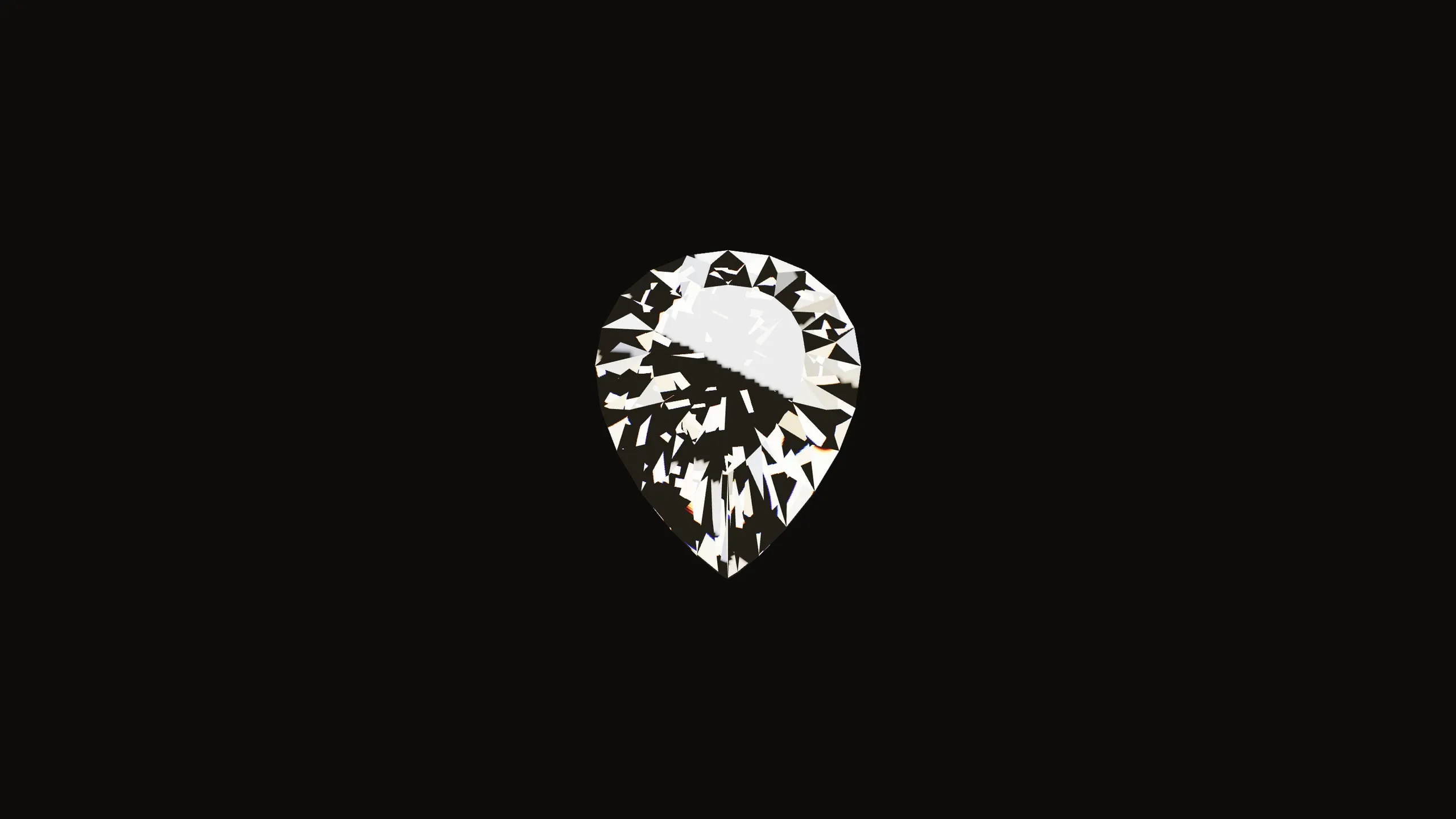
The Sancy is a pure white and transparent diamond. Its weight, estimated by gem valuers in the fifteenth century to be 106 carats, and color would have destined it to ownership by the Indian king. It was found in the oldest area of diamond extraction near Golconda, but the date of its cutting is unknown. Somehow it reached Europe in the late fourteenth century, making it the largest white diamond in Christendom for well over two hundred years.
According to the legendary diamond cutter Gabi Tolkowsky, the cut is definitely Indian, a forerunner of the briolette cut. He can tell this simply from the fact that like many old Indian cut stones, the Sancy’s size was more important than its brilliance: there are fewer facets in the old Indian style, rather than more facets, as in the newer European cuts. Further, one side is more flat, and the other side convex. In the fifteenth century, the cutter would have cut his hands off if it had been done in any other way. Tolkowsky says the Sancy was ‘cut long ago, and most likely in India, and most probably by a Venetian cutter and merchant who would have known its value in Europe.’ …
Precisely when or how the Sancy diamond reached the phenomenally rich and powerful John Galeazzo di Visconti, duke of Milan, is shrouded in the fog of history. But when John succeeded in expanding his sphere of influence to France through the marriage of his stunningly beautiful and perspicacious daughter Valentine Visconti to the rake and rogue Louis, duke of Orléans, brother of Charles VI, king of France, he gave her a dowry beyond belief. . .
including the Sancy diamond. Follow its journey through four royal crown jewel collections. . .