

A fellow writer friend suggested I read a short novel entitled about the AUTHOR by John Colapinto which was ‘making some noise’ in the United States. Since I trust his taste, I bought it. It was only after I received it that I saw the Stephen King blurb:
A thriller worthy of Hitchcock at his best. I wasn’t able to put it down. Splendid suspense.
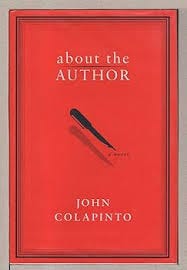
Who was I to gainsay Stephen King. . . or my friend?
They were both right. John Colapinto’s book is a masterclass in suspense. It also treads the well-worn boards of literary fraud in a controversial, original and highly entertaining way. Most significantly, it makes the reader feel the want an author feels to write a good book – no let’s be honest – a bestselling book that makes the blood and sweat and endless hours feel as though it was all in a good cause.
About the AUTHOR captures what happens when someone has committed literary fraud and becomes a resounding success. The really clever bit though is that the real author has purloined the fraudster’s life experiences as the subject of his fictitious novel, entitled Almost Like Poison. The fraudster slowly imbibes his own brand of poison as he tries to live with his lie. The question of ‘intellectual property’ is very deftly woven and throughout the reader is asking ‘which one of these men is really the fraudster?’

(John Colapinto: The Guardian)
But it goes deeper. The fraudster, Cal Cunningham, is a likeable chap who says in the novel’s first sentence that he ‘finds it difficult to write about Stewart’ – the author of Almost Like Poison based on Cal’s life. The second sentence is: ‘Well, I find it difficult to write about anything, God knows.’ Cal has high ambitions and an inability to write. Yup, writer’s block. Yet with each of his excruciatingly head-slapping decisions that lead to his descent into a personal hell, Cal becomes increasingly guilt-ridden. He is wealthy beyond his imaginings (which is saying a lot), a ‘bestselling author’ and is about to make matters impossible to extricate himself from happily.
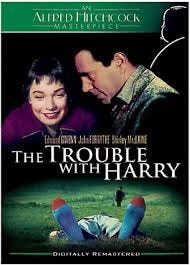
The light-hearted, at times cringeworthy read reminds me of the dark comedy Hitchcock movie The Trouble With Harry (1955). The movie is set in the same Vermont countryside as about the AUTHOR but takes place during a breathtakingly glorious New England autumn. A corpse named Harry, whose body is constantly buried and dug up again by various villagers – each believing themselves responsible for his death – is the simple plot. Although this wasn’t one of Hitchcock’s greatest commercial successes, it was one of his favourites because of its setting and quirky, British humour. I also liked it because it ‘introduced’ the unknown Shirley MacLaine to film.
That’s as close as I’ll come to say anything more about the novel. . . other than to say it’s a great suspenseful and comic read – which I also found thought provoking.
And here’s why.
In author speak, a book that is not bestselling equals keeping the day job – and maybe going out for a meal once a month after the bills are paid. Maybe some clothes. Maybe just putting it in a savings account. I recently read that the average author’s earnings in the UK was around £7,000 per annum. . . even though they’ve gone to all the promotional gigs either they, their agent or their publisher has put together to sell the book.
Bestselling means the literary world takes notice of you. There is never any doubt that your agent or your editor will take your phone call, read your email, or work with you on getting that next book out. Advances, an author’s favourite form of payment, are high – allowing the author to live a normal life usually free from financial woes, and most importantly, ditching the day job. The advances paid to the author are usually earned out within the first month or so of publication, then the author (and the agent) kick in to a steady stream of royalties.
In real life the question of literary fraud and copyright infringement hangs heavy on all authors’ shoulders. We must assert under contract that we are the authors of our books in order for the copyright to be recognised. We’ve come a long way in protecting authors’ copyright since Shakespeare’s day, when there were no copyright protections. Back then, a printer could publish a playwright’s work without his permission, as Thomas Thorpe did to Will Shakespeare’s sonnets and long poem A Lover’s Complaint. Thankfully, that changed over time, and until recently, international copyright laws made it difficult to infringe on an author’s copyright which most assuredly any publisher worth its salt would defend in court.
When self-publishing came along through Amazon or other self-publishing models like Troubadour or Ingramspark or a plethora of others, copyright was weakened. Not through the fault of the publishers, but because they wouldn’t defend the author’s rights – and litigation is a very expensive process. If copyright is challenged by a fraudster in these circumstances, authors are most likely on their own.

But the biggest change and damage to an author’s copyright came with AI or Large Language Models (LLMs). The greatest development in 2025 was with Anthropic, or ‘Claude AI’, as it is known to most people. In the United States, according to Claude AI: ‘three authors sued Anthropic, claiming it had downloaded millions of copyrighted books from shadow libraries like Library Genesis (LibGen) to train its AI systems. The case produced a landmark ruling: ‘Anthropic’s use of legally acquired books for AI training was “quintessentially transformative” and protected as fair use — but simultaneously held that downloading pirated copies was not fair use.
‘Faced with the potential enormous financial liability, Anthropic agreed to pay $1.5 billion to settle the case out of court, with rightsholders of approximately 500,000 titles each expected to receive around $3,000 per title. The final approval hearing is scheduled for 14 May 2026.’ I have had five of my books pirated by Anthropic in this way and have registered for the settlement direct with Anthropic, advising my publisher.
But the real battle ‘about the author’ is ongoing. In March 2026, the Big Five publishers joined forces to sue Anna’s Archive, another shadow library. All five major publishers – Hachette, Penguin Random House, HarperCollins, Macmillan, and Simon & Schuster – filed their joint lawsuit in New York federal court in early March, seeking to shut down the site and alleging it has pirated over 63 million books, offering access to AI developers in exchange for cryptocurrency payments. The publishers are requesting damages of up to $150,000 per pirated work. Even if they win, fully disabling Anna’s Archive, an extraterritorial site will probably remain an ongoing practical challenge.
There are over seventy infringement lawsuits by copyright owners against AI companies as I write. The most significant of these is against Meta and whether it simultaneously uploaded copyrighted works while using BitTorrent technology to download them in a process known as ‘seeding’. If found in favour of the plaintiff, the damages Meta would have to pay would be astronomical. Similarly, in January this year, Hachette and Cengage sought to join a proposed class action suit against Google over alleged misuse of copyrighted material for AI training. In all cases, it seems the central legal question is whether training AI on copyrighted material constitutes fair use. Meanwhile, both publisher and author remain unpaid for ‘books sold.’
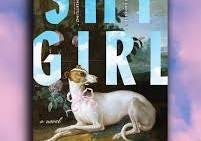
But AI isn’t the only fraudster. . . some ‘authors’ apparently have hopped on the AI bandwagon claiming authorship, when AI seems to have been a co-author. The most notable case ‘pending’ is the horror novel Shy Girl. Hachette’s UK imprint Wildfire had released the book to the home countries in March 2026 when the New York Times presented the publisher with evidence of AI use on the manuscript. Mia Ballard, the author of record, has denied using AI, claiming a freelance editor she had hired for her earlier self-published version may have incorporated AI tools without her knowledge. While the jury is still out – with Ballard suing Hachette – she has removed herself from the public eye and her social media accounts have been taken offline.
And the copyright infringements keep morphing into other scandals, too. Author Jane Friedman discovered about a dozen books sold on Amazon under her name without her knowledge or consent. . .
And of course, there appear to be authors who make statements in their ‘non-fiction’ that defy medical fact like Raynor Winn in The Salt Path. . . but not before two further books were published. The fourth book in the series has been ‘paused’ by publishers Penguin Random House.
So, as an author, I ask every reader to carefully consider the ‘About the Author blurb’ on the fly leaf of most books and spare a moment of ‘thanks’ for the challenges that the book and its author/creator have faced before reaching your hands. Do not buy pirated versions please. Do not use shadow libraries. Most times, authors have not been adequately remunerated for legitimately published works and all the effort and diligence they put into their books. It is only right that the authorial want to write and need to inform, entertain or open new worlds to us all in the future should be remunerated and appreciated. In many ways it is up to the reader to help keep authors writing.