

Yep. I have it from reliable sources. POTUS. And my US publishers. There should be nothing spoken about, written about or sold in US government facilities that is derogatory about America or Americans. The Smithsonian has removed texts relating to this POTUS’s impeachment(s). The National Parks – even Badlands National Park within the Pine Ridge Reservation – aren’t meant to sell items that disparage ‘Americans’. Guess that doesn’t mean Native Americans. History matters. Context matters. Here’s a great example of what I had hoped would be my next non-fiction book.
I was granted access to a British diary some years ago to this English gentleman’s life by his family. I read his diaries from 1915-1945, his speeches, and interviewed surviving family members. His last ‘official’ post was as military attaché to the British Embassy in Washington D.C. during the Second World War. This Englishman fought valiantly in two world wars, advised governments (including the USA), was highly decorated and received a knighthood from Churchill, whom he called ‘Winston’. He was Lord Halifax’s trusted, private advisor while Halifax was British Ambassador in Washington 1941-46. The diaries were never intended for publication yet is revealing in what it skirts over – and almost says. This Englishman went to the right schools (Eton, Oxford – though he left after the first year at Baliol College to become a soldier.)
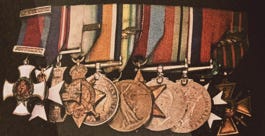
He was undoubtedly a spy in both wars, recruited by his stepcousin and best friend, Sir Stewart Graham Menzies, who became ‘C’ in charge of the entire British SIS in November 1939. In 1916, he was charged to accompany Mata Hari to the Deuxième Bureau in Paris where she eventually stood trial for treason. The archival source is written in his hand explaining his role.
In the interwar period, he wrote about his love life; hunting, fishing and shooting; the family bank; the inexorable march towards yet another German war; his undiagnosed illness which we’d call today PTSD. He also reported back to Menzies on an ad hoc basis on what he saw in his busy travels throughout Europe, India, the Far East, South America and the United States. And why not? He only mixed socially with the upper echelons of international society but loved talking to the tea lady at work or a shoeshine boy. Better still, they loved talking to him. Annoyingly, he was very handsome and could play the piano expertly by ear.
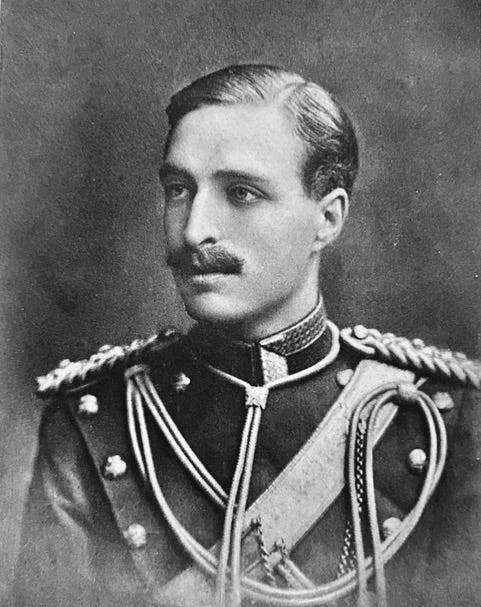
He fell head over heels in love with a young American lady between the wars, who happened to be married. She loved him deeply – but was also in love with her husband. In time, she divorced and married the Englishman. Together they had two sons.
He was a Quaker, from a long line of Quakers, which makes his bravery and military career an anomaly. He was also pro-American because his family had become rich from investing and financing the westward expansion of the American railways in the nineteenth century. The family bank invested in outposts of North America and the British Empire too, becoming a premier British merchant bank. He counted among his good friends Bernard Baruch, Douglas Fairbanks Jr, Cole Porter, William ‘Wild Bill’ Donovan, and Canadian spymaster William Stephenson. In fact, he became the business partner of both Donovan and Stephenson after the Second World War.
He, along with Australian Charles Howard ‘Dick’ Ellis (accused of spying for the enemy in the book Spycatcher)served in the British Expeditionary Force (BEF) from September 1939 to May 1940. In fact, my Englishman was sent back into heavy action from London during the German attack on Belgium to deliver orders to General Sir Charles Gore. He often lamented the French approach to a ‘united front’ with the Belgians and the British, and his firsthand knowledge of the situation gave some solace to King George VI. By June 1940, he and Ellis were responsible for the triage of fighting military refugees at the Tower of London. He travelled the whole of the UK finding only the Polish troops ‘battle hardened’ and ‘ready for retraining’ as part of the British army. There were of course some who were too badly injured to go back to the front line, but he was responsible nevertheless for integrating them into the British system. He also ferreted out potential German spies, men who didn’t ‘smell right’.
He documents rampant anti-British feeling among Americans and the US military. But that was nothing compared to the racism against the American Black population or Jews. What he probably never thought was that the diary would be read for what it almost says compared to the known history, which I’ve done.
When comparing the dates as he wrote down his thoughts, along with known facts and names, a new image of ‘the special relationship’ emerges. Particularly in May 1940. Particularly around the betrayal of a Britain at war and a new prime minister: Winston Churchill. Put together with a fevered shuttle diplomacy, it puts an entirely new picture on the arrest of Tyler Gatewood Kent, US embassy clerk in London in May 1940, and his conviction that October. It also shows America in a poor light.
‘They say’ that in publishing timing is important. There isn’t a US publisher who will touch this story – particularly if I include the transactional actions of President Wilson at the negotiations at Versailles. My Englishman was there. He heard and saw much of the action, but his story may never be revealed.
I had an email exchange with my former editor in the US who wrote that non-fiction is dead. History since Trump 2 is really dead. No one wants to read about it. It’s depressing. Worse no one trusts that it’s the truth. Besides, younger commissioning editors feel it’s not relevant. (He also said if he had to read another ‘romantasy’ manuscript he’d scream.) If a non-fiction book sells 200 copies in a week in the whole of the United States, chances are it will make the New York Times bestseller list.
Obviously, it’s a bad time to write a story about a pro-American British hero. A man who Bernard Baruch helped by sheltering his two sons from the Blitz in London, taking them into his personal care in America. It’s an even worse time to publish his thoughts about ‘in-fighting’ within the Roosevelt administration, the US armed forces, how American investment ‘buys’ whole countries (sorry Greenland), and crippling racism in America.
This Englishman would be branded a traitor to America today, when in fact, he was sent to the United States by Churchill and Menzies because he knew and loved it so well. It was this Englishman who presented the British face as an antidote to the poison spewed by Charles Lindbergh and the America First Committee. He appeared on radio, in person, and in Hollywood to help Americans understand Britain’s predicament. His wife raised over $90 million to help feed and clothe Britons who were bombed out of their homes and workplaces.
Despite being unable to find a publisher for this cracking good story – and an important transatlantic adjunct to the known history – I am so happy that I had a chance to meet him and his wife through these precious diaries and speeches. For that I must thank his family.
If this Englishman is deemed a traitor to America today – along with me for writing this post – then something is definitely rotten in the state of history in the most powerful Western nation. The United States is not Russia or China. Americans could learn more about how it is perceived in the wider world in reading non-fiction by those of us who love it. I’m sure you would like to know my Englishman’s name. Mmm. . . Perhaps one day.