Thomas Hughes (1822–1896) was the author of the enduring and semi-autobiographical Tom Brown’s School Days first published in April 1857, depicting life in at Rugby School, a top English independent boarding school in the Victorian area. He wrote other books, including the sequel to Tom Brown at Rugby, Tom Brown at Oxford (1861) which was first serialised in Macmillan’s Magazine. The Tom Brown of fiction was an egalitarian, much like his author. When Hughes was captain of the First XI in cricket, he invited local boys (who had been previously chased away) onto the cricket pitch to play.
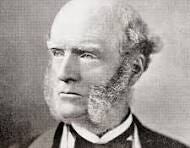
What many of us don’t realise is that Hughes was also a barrister, judge, and Liberal politician. He was a great reformer of society and was deeply involved of the Cooperative Movement, but his parliamentary career hit the buffers with his constituents in Frome, Somerset for backing the Elementary Education Act of 1870 – more popularly known as Forster’s Education Act – which set the framework for all children between the ages of five and twelve to remain in full-time education. The uproar from his farming and factory constituents employing child labour was deafening. Nonetheless, Hughes never wavered from his dedication to social reform and was also a vocal and active member of the Society for the Suppression of the Opium Trade.
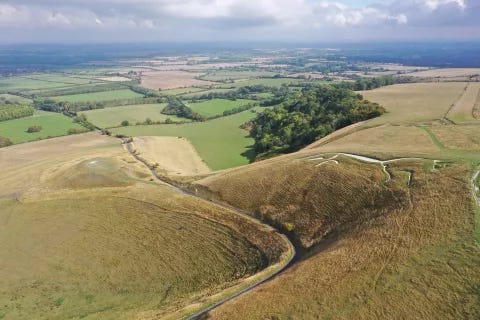
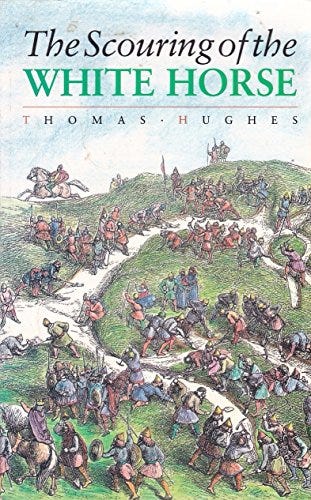
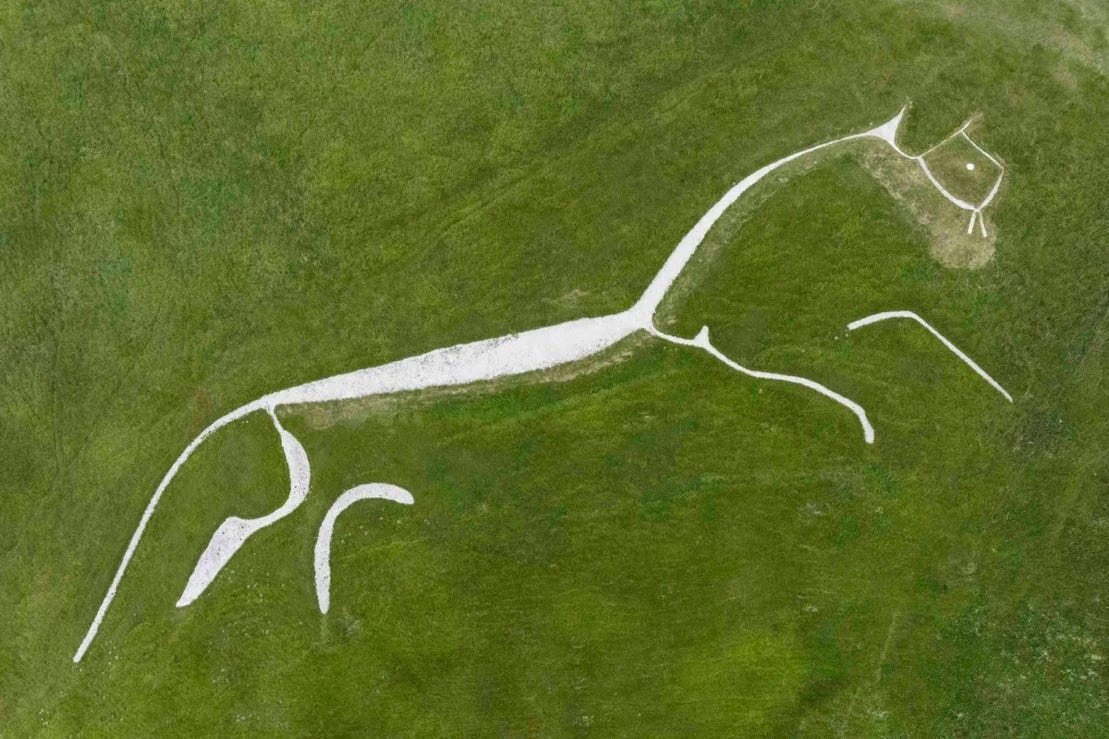
In his ‘fiction’ writing Hughes never ventured far away from the semi-autobiographical. Born in the picturesque, peaceful Berkshire village of Uffington (now in Oxfordshire), he also deeply loved the English countryside. High above the village at a distance of 1.6 miles sits Britain’s oldest chalk prehistoric hill-figure – recently scientifically dated 1380 and 550 BC. Tom Hughes’s 1859 book, The Scouring of the White Horse, or The Long Vacation Ramble of a London Clerk is one of the first to describe the White Horse and its festivals over a millennium in its celebration. It is part childhood memories, part history and part travel diary. At the time of publication, it seems to have been classified as a travel book.
Still, travel writing has long been propped up by techniques used in novels, including complex description, narrative, and substantial quotations from earlier writers who visited the same locations – think Pliny the Elder and the eruption of Vesuvius as seen from Capri in 79 AD. Most of Hughes’s book about the White Horse harks back to King Alfred (849-899) of the West Saxons and later the Anglo-Saxons, known to history as ‘The Great’. While describing the thousand-year-old traditions, celebrations, athletic contests, Hughes alights on the care and maintenance surrounding the preservation of ‘a rude colossal figure cut out in the turf and giving the name to a whole district.’ Legends, Hughes tells us, connect the Vale of White Horse to the ninth-century King Alfred the Great and his victory over the pagans. Just below White Horse Hill sits Dragon Hill where St George allegedly slew the dragon. King Arthur figures in its mythology too.
According to Hughes, King Alfred’s celebration ‘has been held . . . ever since the ninth century. Rich as our land is in historical monuments, there is none more remarkable than the White Horse’. Hughes gives us plenty of warning that readers will encounter a bit of ‘a stir-about’ while indulging in these fantastical tales. Apparently, when he assembled the material he wanted to include in the book, he thought there may be too many historical facts that would probably be of little interest to those not likely to interest those who lived elsewhere than Berkshire:
One short bright gleam of history from the writings of old monks a thousand years ago; traditions and dim legends, which I and most Berkshire men have always faithfully believed from our youth up, and shall go on believing to our dying day, but which we could hardly put before general readers in serious narrative; a dry notice here and there by some old antiquary of the seventeenth or eighteenth century; stories floating in the memories of old men still living, small broad-sheets from country town presses, with lists of the competitors for prizes at rustic games, newspaper articles, remarks by Committee-men and umpires, scraps of antiquarian lore, abuse of the Great Western Railway for not allowing the trains to stop, bits of vernacular dialogue, and odd rhymes.
Like many authors dealing with far-ranging facts, Hughes wondered how he could keep his ‘loveys’ – as any author knows we all have them and have been repeatedly told to get rid of them – and make them into a creation that would widen the interest from just those born and bred in Berkshire to ‘be laid before a fastidious British public’. Taking the example of any good housewife seeking to economise and create a wholesome meal for her family, Hughes set out to put everything altogether into the pot and ‘stirred-about’ with a great wooden spoon to become a delectable stew, or a book even. Maybe he’d add some raisins as well.
In the case of The Scouring of the White Horse or The Long Vacation Ramble of a London Clerk, the ‘raisins’ he had in mind were illustrations by Richard ‘Dicky’ Doyle, a noted artist of children’s fantasy and fairy stories. These, Hughes believed, were essential to make ‘a savoury and pleasant side dish’.
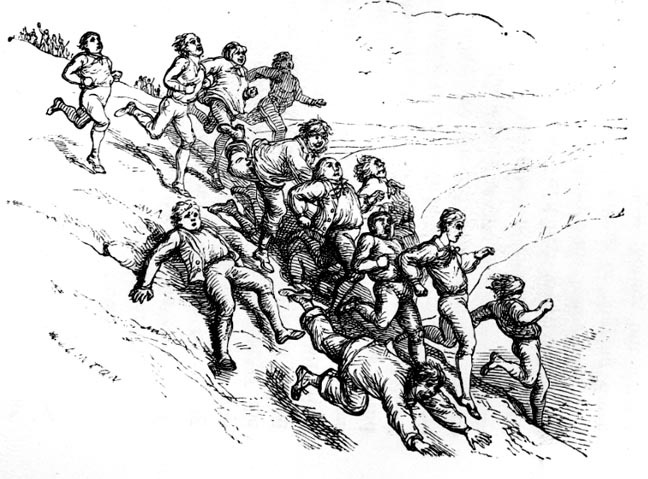
‘Dicky Doyle’s’ depiction of the footrace down White Horse Hill
Hughes, like many of us today, shared the idea that something in our own ‘backyard’ is probably of little interest to those living in other parts of the country or the world.
Today, The Uffington White Horse atop White Horse Hill in the Vale of White Horse sits in Oxfordshire since the boundary changes in 1972 between West Berkshire and Oxfordshire. It hasn’t moved with political whim or fancy and is now known to be much older than the reign of King Alfred the Great. It is a Scheduled Monument in English law believed to be from the late Bronze Age or early Iron Age and is the oldest and most distinctive hill-figure in Britain. It is situated on land belonging to The National Trust and under the guardianship of English Heritage. Part of its beautiful majesty is its isolation from human civilisation.
Yet, the White Horse survives thanks to its re-chalking by people who volunteer mostly from local communities. New chalking – called ‘scourings’ – groom the White Horse lovingly for weeds and other plant seeds that take root when blown onto it by the wind before they add fresh chalk. Because the scourings happen on a controlled rolling programme, the Uffington White Horse lives on as if in a seamless stream of custodianship by those who love its myths and legends and value its existence since before Alfred the Great.
Back in 1738, the scourings took place by an appeal to the Nobility and Gentry to adopt the White Horse scourings as a ‘Saxon-Olympicks’. From 1776-1812, the scourings were reported in the local press as taking place every four or five years along with fun-fair style activities like cheese rolling, racing and pipe-smoking events (for women) among the attractions. By the time Thomas Hughes wrote about it in 1859, the scourings had begun to lapse from living memory. It had been fourteen years since the last one, and the White Horse had begun to vanish.
I put it to you that Tom Hughes’s book helped to renew interest in this ancient monument, our landscape, legends and English prehistory, contributing to the continuum of human endeavour for future generations. Today, twice a year a wider community is invited to help preserve the ‘horse’ with many returning year-on-year contributing to its future.
We of the twentieth and twenty-first centuries did not invent stewardship, conservation or preservation. The survival of the Uffington White Horse and other hill-figures down the millennia is a tribute to ancient humans by people today.
Treasuring the past paves the road of the future.