

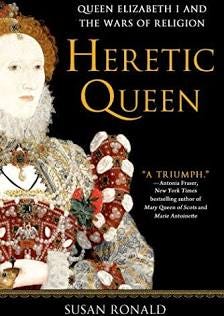
My book, Heretic Queen: Queen Elizabeth I and the Wars of Religion begins with the following paragraph:
The London of Mary Tudor’s reign – like most times past – was truly another country. Rich woodlands and coppice woods of lime, ash, oak, elm, holly, beech, hornbeam and maple carpeted the capital’s county of Middlesex, stretching northward nearly twenty miles to the Essex and Hertfordshire borders. Some of these highly prized woods had belonged to the Oxford and Cambridge colleges ever since the universities had been founded hundreds of years earlier. Others, equally well maintained, had been the property of Westminster Abbey or St Paul’s cathedral or other church establishments. That is until the time of King Henry VIII. With the dissolution of England’s monasteries under Henry beginning in 1536, all the valuable woodland that had once belonged to the Catholic Church reverted to the Crown. Since then, much of England’s managed woodland had been passed on to Henry’s nobles, in thanks for their help in plundering and destroying papal monetary authority in England.
Many better writers and poets than I have extolled the virtues of the English landscape from Shakespeare to William Blake and beyond. In fact, Blake’s epic poem Milton was the origin of the beloved hymn, Jerusalem, which he also wrote. It was set to music by Sir Hubert Parry in 1916 and orchestrated by Sir Edgar Elgar. What is so fascinating about the poem to me is that Blake was highly critical of the king while Napoleon was rampaging through Europe and is particularly mindful that the industrial revolution was destroying our ‘green and pleasant land.’ On 11 January 1804, the same year as Jerusalem was written, Blake returned from London to Sussex to answer an indictment in Chichester Guildhall for sedition against king and country as well as assault against one of the king’s soldiers. Fortunately for Blake and us, he was acquitted and resumed writing poetry.
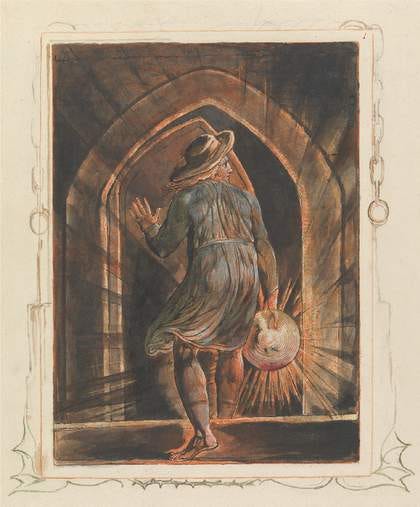
The first lyric in Jerusalem: ‘And did those feet in ancient time’ also appeared in the preface of Blake’s Milton. The illuminated book Jerusalem with 100 plates and a vast cast of characters, published in 1820 portrays human history as a struggle and desire for fulfilment. Blake thought it best (probably in light of his sedition trial) to present his work as his vision of a new consciousness directed at different public and religious readerships. It is also a mythical work and concludes with his vision of freedom of expression empowered in a post-apocalyptic world. At the heart of the poem is his defence of nature before it becomes impossible to walk upon England’s mountains green, lamenting its loss to those dark satanic mills and a call to arms with arrows of desire and chariot of fire and ‘unsleeping’ sword to build Jerusalem in England’s green and pleasant land.
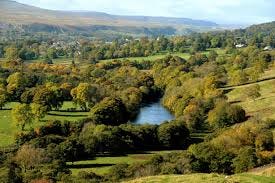
NOWADAYS, many of us have been sleeping – some more peacefully than others – while the government destroys our countryside. The new NPPF (National Planning Policy Framework) which closes its consultation on 10 March 2026 has redefined and decimated something most of us understand and cherish: The Green Belt. Not anymore. It’s been divided between Green Belt and ‘Grey Belt’.
‘Grey Belt’ was once called ‘brownfield land’ as in Annex 2 of the December 2024 NPPF. Brownfield land meant Previously Developed Land (the term the NPPF used, with brownfield land simply cross-referenced to it). Brownfield is ‘land which has been lawfully developed and is or was occupied by a permanent structure and any fixed surface structure with it, including the curtilage of the development land (although it should not be assumed that the whole of the curtilage should be developed).’ This government didn’t like the term ‘brownfield land’ (which I think we also understood) and threw it away. (In the green bin I trust.)
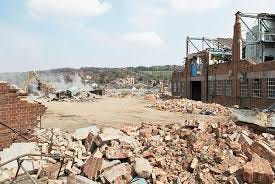
NOW, Green Belt has been seamlessly redefined alongside a newfangled idea they call ‘Grey Belt’. This is one of the most significant shifts in planning policy for a generation and affects everyone. The new NPPF says: ‘For the purposes of plan-making and decision-making, the NPPF defines the Grey Belt as ‘land in the Green Belt comprising previously developed land and/or any other land that, in either case does not strongly contribute to any purposes (a), (b) or (d) in paragraph 143. Green Belt itself is redefined as:
(a) to check the unrestricted sprawl of large built-up areas;
(b) to prevent neighbouring towns merging into one another;
(c) to assist in safeguarding the countryside from encroachment;
(d) to preserve the setting and special character of historic towns; and
(e) to assist in urban regeneration, by encouraging the recycling of derelict and other urban land.
Point (e) is the killer clause for me . Let’s say that there is a disused barn or derelict buildings on land in the Green Belt. Point (e) allows this and perhaps all the land surrounding it to be ‘recycled’ into Grey Belt.
But even Green Belt is being developed. Oxford County Council’s proposed lease of Green Belt known as The Triangle in Kidlington to Oxford United football club is the last piece of land that prevents the town of Kidlington from merging into Oxford. Oxford County Council, which purchased The Triangle to prevent Oxford’s northerly expansion to merge with Kidlington, is behind the deal.
Moving on… Then there are specifically ‘protected’ areas known as Green Belt:
· Habitats sites and Sites of Special Scientific Interest (SSSIs)
· Land designated as Green Belt, Local Green Space, a National Landscape, a National Park (or within the Broads Authority) or defined as Heritage Coast
· Irreplaceable habitats
· Designated heritage assets (and other heritage assets of archaeological interest)
· Areas at risk of flooding or coastal change
A few miles from me there is a planning application to quarry a designated ancient woodland and its irreplaceable habitat – of the type I wrote about in Heretic Queen which is seeking approval. The Environment Agency has mentioned ‘mitigation’ in its response. Since mitigation is intended as a replacement of ‘almost like’ for ‘like’ in the landscape, I fail to understand how a medieval woodland and its habitat can be replaced by mitigation. I could go on and on. . . including the destruction of a significant international archaeological site near me of paleontological interest (and a designated SSSI) recognised for its diverse and well-preserved assemblage of marine fossils from the Upper Jurassic and Oxfordian stage. This makes it unique throughout the world. Sadly, it has initial planning approval for development.
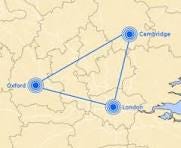
Conversely, the original Cambridge – Oxford – London ‘Golden Triangle’ for life sciences and technology thrives in is its own ‘ecosystem’ of grand development projects. In 2025, science-related real estate across the Golden Triangle totalled 1.35 million sq ft, a 42% increase on 2024. Oxford alone saw its take-up increase by 61%, largely driven by the Ellison Institute of Technology taking 450,000 sq ft at the Oxford Science Park.
But that ecosystem is dwarfed when compared to the proposed 1.5 million ‘new homes’ (and required infrastructure) without strict guidelines for rooftop solar panels and other energy efficient ways to make the most of our pocketbooks and land use. The number of government instigated projects for ‘growth’ is staggering. Meanwhile, the government wrestles with how its developments can preserve the countryside’s distinctive natural and landscape qualities. It has even put forward a plan for a national forest in the Growth Corridor. Unsurprisingly, conservationists across from Cambridgeshire to Oxfordshire and Bedfordshire are rightly concerned that the combination of mandatory housing targets under the new NPPF, new Grey Belt provisions, and the Growth Corridor’s enormous scale. These are the most significant threat to the rural landscape of central and southeast England in living memory.
That is if we don’t talk about the conversion of (BMV) Best and Most Valuable farmland into solar farms or the fact that food security has been de-prioritised. I, for one, lament the loss of our ‘green and pleasant land’.