

During lockdown I gave my young grandchildren ‘history lessons’ on zoom. I said history wasn’t about boring dates but about the people who made important events happen. Within the word ‘history’ there was the word story. People have told stories ever since the cave dwellers lived thousands of years ago – long before they had alphabets to write things down – so they painted their stories in pictures on the cave walls. Later stories of things that passed down wisdom, folktales or matters of grave concern in tribal societies were often told around the campfire. Stories give us all a sense of community. I saw my little granddaughter doodling thinking she wasn’t paying attention when she piped up smiling and said, ‘It’s not his-tory. It’s ‘hi-story!’
Well, I have a ‘hi – story’ I feel has resonance today.
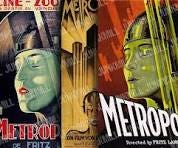
History repeats itself but never in quite the same way. The 1920s was a decade scarred by The Great War (as it was called before its sequel came along). It had a near universal terror of machines taking over the world. Fritz Lang’s silent sci-fi Metropolis of 1927 (they were all silent until Al Jolson’s The Jazz Singer that same year) showed machines ruling civilisation. Books, including Eric Maria Remarque’s All Quiet on the Western Front published in 1929 gave the soldiers’ view of the new killing machines. Fear of machines was written about in magazine.
In 1922, Henry Ford, father of the assembly line and Ford motorcars, trucks and airplane parts said in his autobiography: ‘I think that unless we know more about machines and their use, unless we better understand the mechanical portion of life, we cannot have the time to enjoy the trees, and the birds, and the flowers, and the green fields.’ Ford was many things besides a great innovative engineer. He created thousands of jobs and helped ‘make America great’.
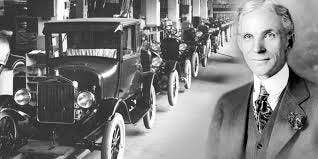
Hitler had a signed photograph of Ford in his Berlin office. The Führer admired innovation and engineering and machines. He also worked very closely with Ford executives during the Second World War – to the point where American GIs remarked that they were shocked to see they were shelled by Ford tanks.
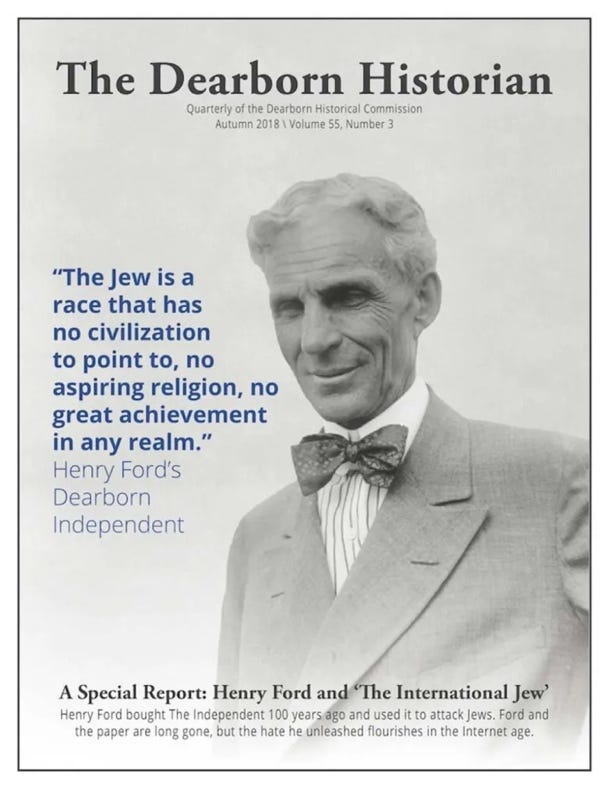
Today, a half-truth says Ford was ‘a man of his times.’ He was also a racist. His bestselling hate manuals told the old lie invented by the Russan tsars that there was a secret Jewish cabal afoot. These were removed from the market, and Ford’s image made shiny again after the extent of the Holocaust was known. Ford’s rewritten ‘official’ hi-story is a lie.
But that’s only part of his ‘hi-story’. One lie that passes as the Truth. Just like today.
But one lie leads on to another. . .
Ford was a hero to the first truly international all-American hero: Charles A. Lindbergh. They socialised frequently. Lindbergh told friends that ‘some of Ford’s ideas are far out, but they are always stimulating.’ Later, Ford told Detroit’s FBI Chief, ‘when Charles comes out here, we only talk about the Jews.’
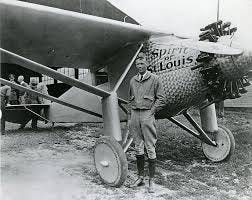
Lindbergh was the aviator who conquered the Atlantic Ocean in the first solo non-stop flight from New York to Paris in 1927. ‘Lucky Lindy’ as he was called barnstormed through the U.S. to create an air mail service and cultivate the persona of a likeable, handsome daredevil. He was financially backed by the equivalent of our billionaires today, mostly at the House of Morgan. He married Anne Morrow, daughter of a Morgan director. Together they worked to chart the Atlantic for his dream of passenger flights that would one day make the crossing simple.
In March 1932, the Lindberghs twenty-month-old son, Charles Jr, was kidnapped. The toddler’s body was found two months later some four miles from the family home in Highfields, New Jersey. Bruno Hauptmann was found guilty of the kidnap and murder and executed. What few knew until recently was that Lindbergh was a ‘great practical joker’. Two days before the kidnap, his wife became frantic because the baby had disappeared from his cot. Lindbergh had hidden his son in a closet as a joke. Some joke.
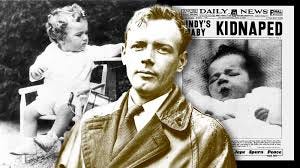
The American press conspired indirectly to give Hitler his greatest American propaganda coup. Charles A. Lindbergh left the United States for England on twenty-four hours’ notice with his wife and second child in disgust at its continued haranguing. Harold Nicolson and his wife Vita Sackville-West gave them sanctuary in one of the barns at Sissinghurst for the next few years. But Nicolson became ever more alarmed to see and hear that Lindbergh was on the path to become the Nazis’ most ardent American admirer.
At the end of 1937, Lindbergh was invited to German airfields and factories. At the Focke-Wulf factory in Bremen he saw a demonstration of a prototype helicopter. Ernst Udet, the German flying ace in the Great War, showed Lindbergh the Rechlin air testing station in Pomerania – the most secret aircraft establishment in Germany. There, he examined the Messerschmitt (ME) 109, the Luftwaffe’s single-engine fighter and the Dornier (DO) 17, its bomber-reconnaissance aircraft. He learned, too, that Daimler-Benz engines were used in a new Messerschmitt 110, under development as a twin-engine fighter. He let himself be photographed with Hermann Göring as he pinned the Luftwaffe’s highest medal on him. Anne Lindbergh called the medal ‘The Albatross.’
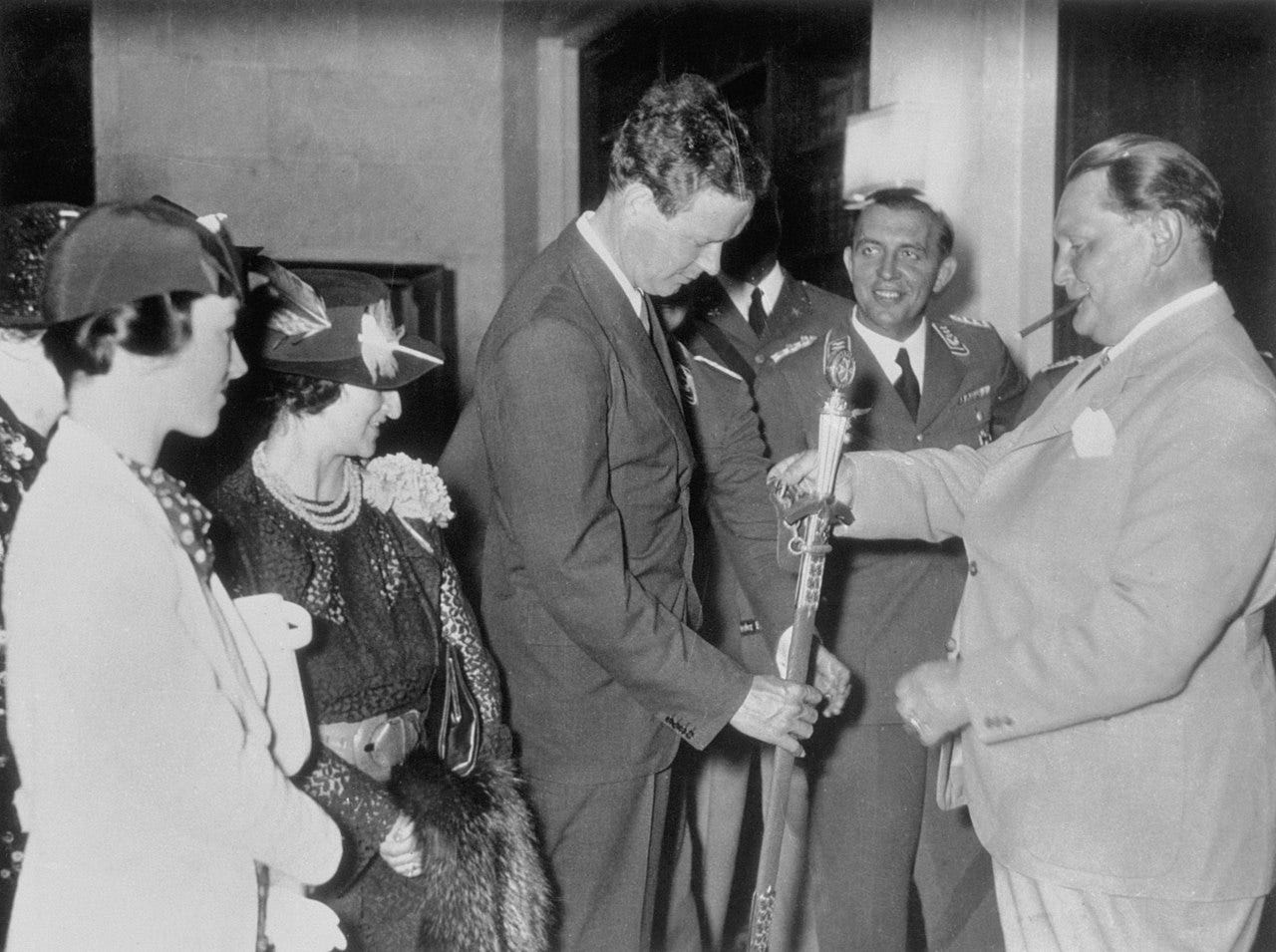
Lindbergh regaled his English friends ‘with gloomy aviation data’ predicting Germany would reach parity with the United States in 1941. Nicolson thought Lindbergh was defeatist when he predicted ‘our defences are simply futile. . . He [Lindbergh] thinks we should just give way’ and become Germany’s ally. Worse, Nicolson couldn’t explain Lindbergh’s belief ‘in the Nazi theology’ other than to think that Lindbergh had begun to hate the American public, democracy, and the press.
By the spring of 1938, Lindbergh decided that he’d had enough of his press-enforced retirement. ‘England, aged, saw not the future but the past and had resigned herself to the gardens of her greatness,’ he ungratefully told Nicolson. A house in France was bought, scientific eugenics experiments undertaken and visits to Germany became more frequent. A luxury flat was offered by Göring in Berlin, but the pull to ‘set America straight’ was too great. They returned home in the spring of 1939.
Five days after the declaration of war in September 1939, President Roosevelt issued two proclamations on American neutrality that ‘no American citizen could be expected to remain ‘neutral in thought.’’ Two weeks later he asked the anti-interventionist Congress to lift the international arms embargo attached to the neutrality laws. Roosevelt was determined that America’s old allies must be supported.
![Charles Lindbergh and Senator Burton Wheeler at 'America First' Rally, New York City]. | Montana History Portal](https://substackcdn.com/image/fetch/$s_!5S6Z!,f_auto,q_auto:good,fl_progressive:steep/https%3A%2F%2Fsubstack-post-media.s3.amazonaws.com%2Fpublic%2Fimages%2F6744473f-0bd8-4946-a729-70f485b8cbb4_999x776.jpeg "Charles Lindbergh and Senator Burton Wheeler at 'America First' Rally, New York City]. | Montana History Portal")
On 15th September 1939, Colonel Charles A. Lindbergh took up the gauntlet his father had thrown down as an appeaser in the Great War. (Pictured above saluting with isolationist Senator Burton Wheeler.) Lindbergh’s radio speech began, ‘I speak tonight for those people in the United States who feel that the destiny of this country does not call for our involvement in European wars. . . We must keep foreign propaganda from pushing our country blindly into another war. Our forebears had fled the constant European conflicts, preferring the wilderness and Native American to their problems. . . This is simply one more of those age-old quarrels within our family of nations.’
The implication was that Hitler was not such a bad chap. Peace was worth the price. ‘We must not be misguided by this foreign propaganda to the effect that our frontiers lie in Europe.’
Opposing him on radio was one of my heroes, journalist Dorothy Thompson. She lashed out at Lindbergh, calling him a fascist, a fallen hero, with the ‘notion to be the American Fuehrer.’ Privately Roosevelt labeled him ‘a Nazi.’ But what was the person in the street to think when America’s only international hero said such things? Those in favour were American Firsters or One Hundred Percenters. Sound familiar?
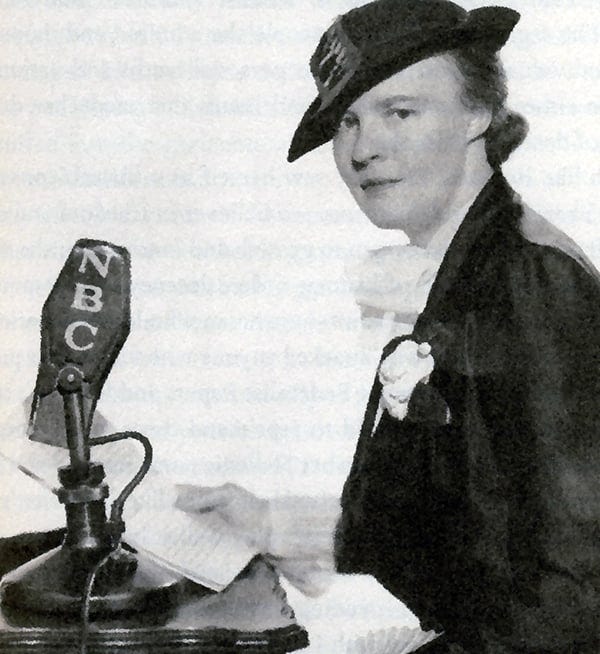
Lindbergh wrote in his diary on 2 April 1939, ‘I believe she [Germany] has pursued the only consistent policy in Europe in recent years. . . The question of right and wrong is one thing by law and another thing by history.’
By that fall, Lindbergh was making racist speeches on the radio and in person as the America First poster boy. He urged the ‘white populations’ to see sense and only if ‘the white race is threatened’ should they fight one another. Jews were not ‘white’ and people of colour didn’t rate a mention. In March 1940, the Atlantic Monthly quoted him cynically saying the French and British were fighting for their possessions where the German claimed a valid ‘right of an able and virile nation to expand—to conquer territory and influence by force of arms as other nations have done at one time or another throughout history.’
Another bald lie. You would have thought after all that time in England and France he would have realised we were the world’s oldest democracies and the fight was against tyranny.
Lindbergh found his voice in a Midwest nativism, stronger and more virulent than his own father’s populism. Anne could do little but sorrowfully mourn her internationalist father, the Morgan partners who were her father’s lifelong friends, and the discreet, kindly ‘warm rich world’ her father inhabited with likeminded souls.
That her husband railed against ‘powerful elements in America’ who controlled the ‘machinery of influence and propaganda’ must have been hurtful to Anne. Those powers were unnamed, but everyone understood they were the men who ran America’s industry and banks. The men who gave Lindbergh his start.
Lindbergh never believed that there were fifth columnists in the United States and was vocal against all the ‘calamitous chatter’. He assured Americans no foreign power could conquer the U.S.A. without an accompanying army, which could never invade by air or sea. ‘There will be no invasion by foreign aircraft, and no foreign navy will dare to approach within bombing range of our coasts,’ Lindbergh said. ‘No one wishes to attack us, and no one is in a position to do so.’
This is just a snippet of Lindbergh ‘hi-story’ taken from my Hitler’s Aristocrats. . .
I take comfort that the most galling thing of all for Lindbergh was that after the bombing of Pearl Harbor, he wrote to Roosevelt offering his expertise. He never received a reply and no one in the military would employ him. Lindbergh finally found work in the Detroit-based factory of his old friend Henry Ford.
It’s no fun to be on the wrong side of a ‘hi- story’. Equally it is upsetting to see present-day ‘Lindberghs’ cropping up again around the world, spreading half-truths or full lies out of the mouths of people who should know better making these pass for history.
More comfort can be gained from Winston Churchill’s words about lies, ‘A lie makes its way halfway around the world before the truth can get its pants on.’