

Lately I’ve found myself reading a number of books which say they are ‘history’ or ‘biography’ when they are actually memoirs. As an historian and biographer these perfectly good stories that are more often than not quite entertaining have left me cold. Is it because I’m astounded at the exponential growth of memoir in the market when both biography and history (particularly in the United States) are in the dumps?
I like to think I’m not the envious sort of author decrying silently; What? So-and-so has written another book? Perhaps I’ve given this conundrum more thought than I should or that’s healthy for me personally. I’ve had a bit of time on my hands – a cancelled fortnight’s holiday to Sicily due to my husband’s sudden and totally unexpected bout with ‘benign vertigo’ which was only diagnosed after he was rushed from Gatwick by ambulance to East Surrey Hospital (by the way, the care was stupendously good – despite being administered for eleven hours in the corridor of A&E.)

My musings about the rise of memoir began in those very insalubrious surroundings to take my mind off the real question is it a bleed on the brain? A mini-stroke? A stroke? A brain tumour? (Fortunately, none of the above.)

The word is derived from the French mémoire or memory. It is meant to be about a factual event or theme or period in the author’s memory. It is personal to the author, and while ‘fact’ to the author whether or not it is ‘fact’ to those who knew the author during the period described. I recalled the old Russian proverb He lies like an eyewitness.
Ask any (SIO) Senior Investigating Officer of the police. We see it all the time in films and on television: ten eyewitnesses will have ten differing stories, and it is down to the skill of the detectives to figure where the ‘facts’ can be found in what a court of law would eventually have to determine is ‘truth’.
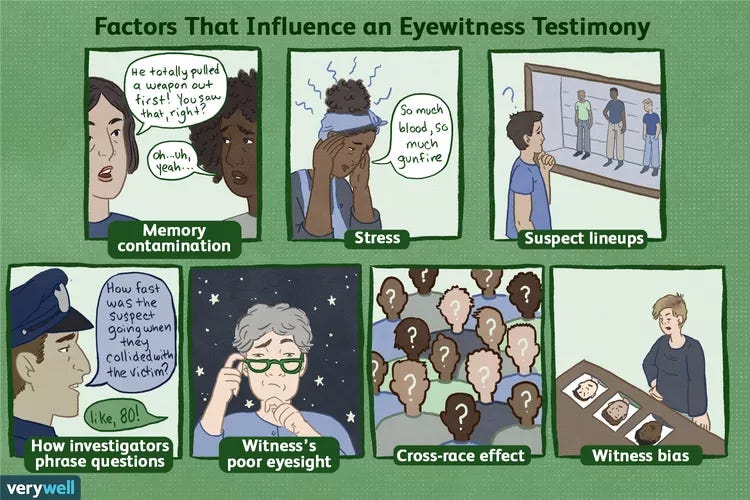
Was that what bothered me in the memoirs I’d been reading? It seem that it did. . .
Some books that purport to be biography (a history about a person/people) or history (fact from the past) I realised were actually memoir. The authors, all very competent and well-respected were there – in a moment of history. The first time I read these books, which shall remain nameless, I thought they were historically correct. Yet when I went back to original sources at archives or in letters written by others, I clearly saw that the view taken in the ‘history’ was one person’s memory as an eyewitness to that history, and all the historical facts needed to be verified elsewhere. What I found rather shocked me. Many basic facts in these histories were unverifiable or differed mildly or wildly from the accepted or even questioned history.
I’m not talking about grammatical errors or misspelling someone’s family name or getting dates of birth wrong. I’m talking about battles lost or won or the interaction with others that crossed the path of the author writing the ‘biography’ or ‘history’. I’m certain that the authors of these books were not trying to ‘big’ themselves up in the history but simply had forgotten the details with the passage of time – in some cases by as much as twenty years.
The other thing I found disturbing was how in more modern ‘histories’ facts have become perverted by what is deemed acceptable in the language of today. Don’t get me wrong. People still die in battles or survive the Holocaust. It is more in the description of prejudices that were prevalent in the past and refashioning how these were devastating to people living in those times. A good example of what I’m referring to can be found in my biography Condé Nast when I describe employment notices on office and factory doors in New York City: ‘No Negroes, No Irish, No Jews.’ My copyeditor insisted that I couldn’t write ‘negroes’ and in fact preferred that the reference to the sign be taken out. I said no to removing it because (a) it was a crucial piece of history that I was unhappy to bury and (b) it was Condé’s policy to hire the best in every field irrespective of their race, colour or creed. A compromised was proposed that I replace the word ‘Negroes’ with ‘Blacks’. I refused. The word ‘Blacks’ was a much later invention and was a word of its times, just as ‘Negroes’ was the correct word for its times. I won.
This minor skirmish over language could have had me go off on a tangent but just remember while I was thinking this through I was waiting for my much-loved husband to have a brain scan. So, I stuck to the point.
Memoir is important but it may not necessarily be history. It is dependent on one point of view, which does bring the reader close to authors and the events they have written about. Anything else that touches the personal life of the memoir should however be grounded in fact.
That brings me to the family memoir I had wanted to take on the trip to Sicily to read. It had rave reviews, but I usually don’t pay attention to rave reviews because most authors (like me) don’t like giving reviews that are negative. Instead, we let the publisher know in advance that if we cannot give it a positive review, we will not comment. I had bought the book as part of a clutch to read and exchange with my husband on holiday. I’d read the first page, liked it, bought it. My husband had Mario Puzo’s The Sicilian among others.
As we wait for the brain scan, my husband dozes and I start reading about the father of the author. By page 50, I begin to wonder about the author’s source material. Some of it doesn’t ring true to my own knowledge of the pre-Second World War world. I turned to the acknowledgements to see that it was (as expected) the father’s papers and the memories of others who knew him. By the time I hit Chapter 6, I became sorely disappointed in the book. The author had not verified any of the ‘memories’ or facts taken from his original sources. So much so that the ‘big history’ is badly misrepresented to the reader.
The work of the British Security Coordination in New York under the auspices of Sir William Stephenson (a Canadian) is boilerplate – and based on Stephenson’s own aggrandisement of his role in espionage in America. Stephenson was important, but not in the way described. It ignores the work of others who would have come across the author’s father. Worse, it credits J. Edgar Hoover with running the American spy network in Latin America. Wrong. It was Nelson D. Rockefeller in what was euphemistically called ‘The Rockefeller Shop’. There is no mention of the Latin American network run by I.G. Farben that the Rockefeller Shop came up against. But when it comes to the description of the German consulates in the United States, it reads like a work of utter fiction. I checked who the publisher was: Penguin Random House. Shame on you.
I wrote a book called Hitler’s Aristocrats: The Secret Power Players in Britain and America who Supported the Nazis 1923–1941. Everything written about the German consular officials was incorrect in the memoir. Fritz Wiedemann, Consul to San Francisco from February 1939 until booted out in June 1941 was not a member of the Abwehr. He was Hitler’s commanding officer in the First World War and one of his three private secretaries in Hitler’s personal office used to dupe Chamberlain. He was present at the Munich conference that divided up Czechoslovakia and carried out personal orders from Hitler and I.G. Farben. He imported spies (along with his part-time lover Princess Stephanie von Hohenlohe) to America and sent Stephanie to Panama as part of the Nazi plot to blow up the Panama Canal.
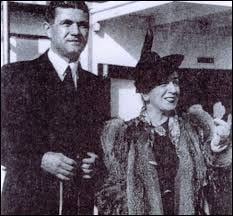
(Fritz Wiedemann with Princess Stephanie)
Chapter 7 was as far as I went. The historical errors were mounting, and I realised that this book purchase was a mistake for anyone who knew the bigger history and had read several biographies of the people mentioned. Besides, we’d done our time, and my husband was going to be discharged with the best possible diagnosis ‘benign vertigo’ after eleven hours in hospital. The holiday was cancelled but I was elated that I could take him home in twenty-four hours’ time (another night at the Sofitel, who were also brilliant) once he had stabilised on the medication prescribed.
The book was left in the bin at the hotel. So, a word of warning to publishers and would be memoir writers: check your history, too.