

We’ve all heard of Anne Frank’s diary. A most talented girl who died aged fourteen and whose diary stands as a chilling testimony to the Holocaust.
Most of us have heard of the derring-do of the French resistance, too. I had relatives who fought in the French resistance, who saved Jews, but were never acknowledged by the government for their bravery. Some of their antics told around the dinner table made us laugh and cry at the same time. Their imagination and dedication to defeating the enemy under such duress has always been a beacon for me, showing the good in humanity. Maybe that’s why I’ve long been interested and intrigued about what happened to ordinary people living through extraordinary times and how they coped and survived (or not).
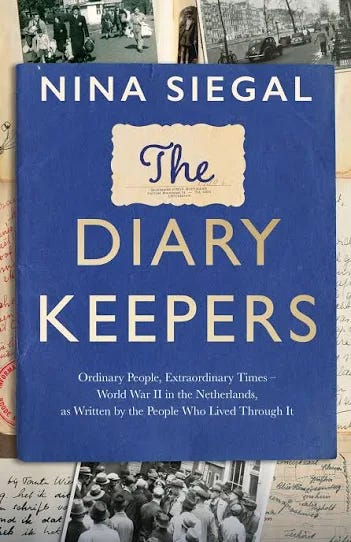
But I have rarely come across a single book that seeks to explain the uncomfortable collective memory of a nation during the Second World War. Nina Siegal’s towering work The Diary Keepers is just such a book. It is long – 482 pages – and riveting. Most significantly, Siegal takes the reader through a compelling narrative of how the national memory of the Netherlands developed after the war, and how that differs from the true experiences written by people living through it. It is honest, intimate and significant. Individual diary entries from those who just put their heads down to get on with it – to Dutch policemen carrying out the occupiers’ orders (and agreeing with the Nazis) – to shopkeepers and Jewish journalistic resisters are all set fairly into an historical context that is touching, palpable and informative.
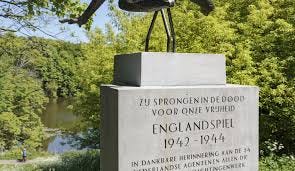
What most of us do not realise is that the Dutch experience was different from most other of the occupied territories from 1940-45. The Netherlands surrendered on 10 May 1940. The main resistance groups among Dutch citizens – most of whom were not Jewish – had been infiltrated early in its existence, and many brave people were murdered. All the networks set up by the British SIS (Secret Intelligence Service) in The Hague were infiltrated early on, and despite the SOE (Special Operations Executive) rebuilding these by early 1942, its own operations were severely compromised by a highly successful German codebreaking offensive which the Germans called Operation North Pole or Englandspiel (playing the English). Fifty-three SOE agents were parachuted into occupied Netherlands and were immediately captured. Their codes were easily broken, and captured airmen and women were used to lure others into the Englandspiel trap. Only three survived the war.
Unlike the French, the Dutch weren’t liberated until April-May 1945 in the main by Canadian armed forces. By then, seventy-five percent of all Dutch Jews were murdered by the occupiers. Admittedly, it was easier to round them up in a small country especially since most Jews lived in one city – Amsterdam. Those who could, hid away in the country’s northeastern quadrant, sheltered by farmers or farm workers who stood against the occupiers’ numerous raids. A few managed to escape. But what Siegal’s work points out is that it wasn’t the fast-moving ghettoisation of Jews like in Poland and elsewhere, but rather a ‘slow burn’ that fooled some people. The Dutch, so the Germans believed, would remember they were ‘little Germans’. Everything appeared to stay the same for months on end, except for rationing. No special branding of Jews happened until the autumn of 1941. Then ‘The Strike’ of February 1942 against the Nazi treatment of Amsterdam’s Jews changed everything. (The February Strike is still remembered annually.)
By the summer of 1942 many brave Dutch men and women hid Jews, like Elizabeth van Lohuizen who wrote a 900-page war diary in six notebooks. Van Lohuizen not only outlines the hardships and ‘incremental adjustments’ all Dutch people had to endure, but also who was to be feared, who was to be protected, and how an ad hoc escape network came into being. Even the Jewish Council – which was initially reluctant to ‘align itself’ with the occupiers had become complicit in sending off Jews to ‘work camps’ for fear of worse reprisals against those who remained.
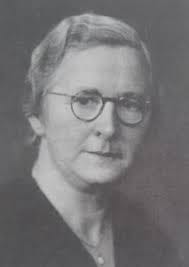
(‘Bets’ van Lohuizen, NOID)
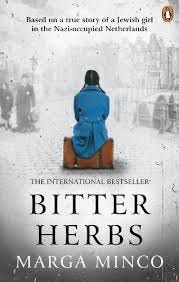
Siegel writes about the epilogue of Marga Minco’s Bitter Herbs 1957 novel loosely based on Minco’s war years. The epilogue’s title is ‘The Tram Stop’. The protagonist’s uncle, the only other surviving family relative would stand at the local tram stop every day, in case his brother returned from the camps. The Red Cross had long before told him that his brother would not be coming home. Minco’s protagonist, at the end of the story stands at the tram stop, too, hoping for ‘someone with a familiar face who would suddenly be standing right in front of me.’ Of course, in real life, not Minco’s father, mother, brothers or sister ever came.
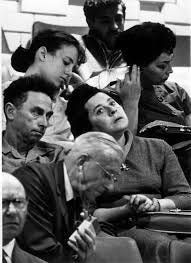
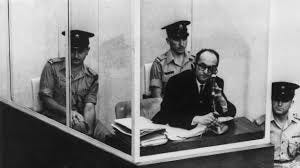
As the full horror of the Holocaust revealed itself in first fifteen years of the postwar era, the Netherlands suffered a period of ‘immense suppression’ or a ‘collective locking up’ according to historian Loe de Jong. It was a common reaction in most of the occupied territories. It was only with the trial of Adolf Eichmann in Jerusalem in 1961 that a key of sorts was found. Gideon Hausner, one of the prosecutors in Eichmann’s trial, called on survivors to ‘concretize’ and testify about what happened to them in their own worlds with each telling their fragments of the truth. One hundred and eighteen eyewitnesses and ‘victims’ were called to testify. When they spoke out, the full horror of being dragged from one’s home, transported in cattle cars eastwards without trial, interned in concentration camps and then the desperate urge to survive against all odds or not became the individual human story of the murder of six million people. Eichmann had once said, the death of six million people is only a statistic. His trial changed all that.
Nina Siegel’s forensic search for the wartime diaries tell the hidden story on an equally personal level – the story of collaborators, those who just wanted a quiet life and those who braved the most severe consequences for helping ‘those poor people’ as some called the Jews. It is an historic gem. She puts so much into perspective for the modern reader, including ‘the gradual lifting of the collective repression’ of memory.
You may wonder what happened to those Dutch men and women who ‘aligned’ themselves with the Nazis and later became silent, so silent that they hoped they would escape notice? The Dutch government remained uneasy. The death toll of Jews – 100,000 out of a total of 140,000 was staggering. Many Jews in hiding – like Anne Frank and her family – were given up by those who were believed to be their friends. (Though never proved in court, Otto Frank left a note behind saying that Arnold van den Bergh, a member of the Jewish Council, and a man who had evaded any punishment, had revealed their whereabouts.)
On a wider scale, the simple answer about justice is that the postwar Dutch government formed courts for extraordinary justice (Bijzondere Rechtspleging) in dealing with the criminal, administrative and disciplinary administration. It had jurisdiction over collaboration, treason and crimes like murder, torture and pillage. Over 400,000 cases were investigated; 14,000 were deemed serious. One hundred forty-five cases led to the death sentence. Forty-one men and one woman were executed by firing squad in the last instances of capital punishment in the Netherlands. Among those executed was Anton Mussert, leader of the Dutch Nazi party (NSB).
Memory and collective memory explained through contemporary diaries that are not intended for publication are a real gift. Everyone interested in history should read The Diary Keepers, for the lessons learned and those yet to be understood.