Journal ·
Shakespeare & ‘Death of Kings’
The Earl of Essex’s Rebellion
At our local Crime Writers’ Association lunch shortly after I finished my manuscript for Much Ado About Will – Being a True Account of the Shakespeare Family, more or less, my supportive and knowledgeable friend Philip Gooden, very kindly gave me a book from his six-book Shakespeare murder mystery series entitled Death of Kings. Originally published in 2000, revised in 2009 and published yet again in 2020 by Constable it has quite obviously stood the test of time. Although it is a novel, the historical facts shine through Philip’s book – as I would expect – without detracting from its highly entertaining and really clever plunge into one of the murkiest episodes in the long reign of Queen Elizabeth – The Essex Rebellion. Well done Philip!
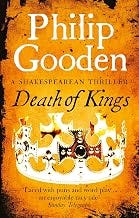
The quote upon which the title rests Death of Kings is from the Shakespeare play Richard II, Act III, Scene II when on his return from Ireland and Wales, King Richard II hears that his armies have scattered before Henry Bolingbroke’s rebellion as it sweeps across the country. Henry is Richard’s first cousin, the son of John of Gaunt and will overthrow Richard to become Henry IV. When the ‘death of kings’ lines are spoken by Richard, all that is in the future. He is overwhelmed, sensing his own fate and the fragility of his royal power. Richard physically sinks down and laments how death mocks the vanity of kings:
For God’s sake, let us sit upon the ground;
And tell sad stories of the death of kings;
How some have been deposed; some slain in war,
Some haunted by the ghosts they have deposed;
Some poison’d by their wives: some sleeping kill’d;
All murder’d: for within the hollow crown
That rounds the mortal temples of a king
Keeps Death his court and there the antic sits,
Scoffing his state and grinning at his pomp,
Allowing him a breath, a little scene,
To monarchize, be fear’d and kill with looks,
Infusing him with self and vain conceit,
As if this flesh which walls about our life,
Were brass impregnable, and humor’d thus
Comes at the last and with a little pin
Bores through his castle wall, and farewell king!
In Philip’s book, Nick Revill is a player (as actors were called then) for the Lord Chamberlain’s Men – the troupe where Shakespeare is one of the sharers or owners. Revill is forced to act as a government spy and keep watch on his own company, reporting back to Sir Robert Cecil, Queen Elizabeth’s eyes and ears now that his father William Cecil Lord Burghley and Francis Walsingham are both dead.
Although not a great beauty who is at times weighed down with his physical disabilities, Cecil is by far the brightest button in the queen’s advisory box. Elizabeth and all her advisors had spies and frequently used the players themselves to spy on other nobles of the realm while performing in their homes. In Philip’s book, the action centres around the time of the Essex Rebellion in February 1601 and it is tightly crafted.
Robert Cecil could be the villain or hero of any piece depending on which side of the fence one stood on. He understood that Queen Elizabeth had developed a highly effective survival system of ‘favourites’ where the current well-beloved was more heeded – usually – than any other person at Court. Certainly that was true of Robert Dudley, Earl of Leicester in his lifetime. But Leicester had been dead since 1588. Sir Christopher Hatton had also passed on a decade earlier and now Walter Raleigh was Captain of the Guard in his place. Cecil’s genius was to work with Elizabeth’s well-honed ‘divide and rule’ policy amongst her often-fractious coterie of young men. His patience and understanding allowed him to manipulate events as the ageing queen’s chief advisor and Secretary to the Privy Council.
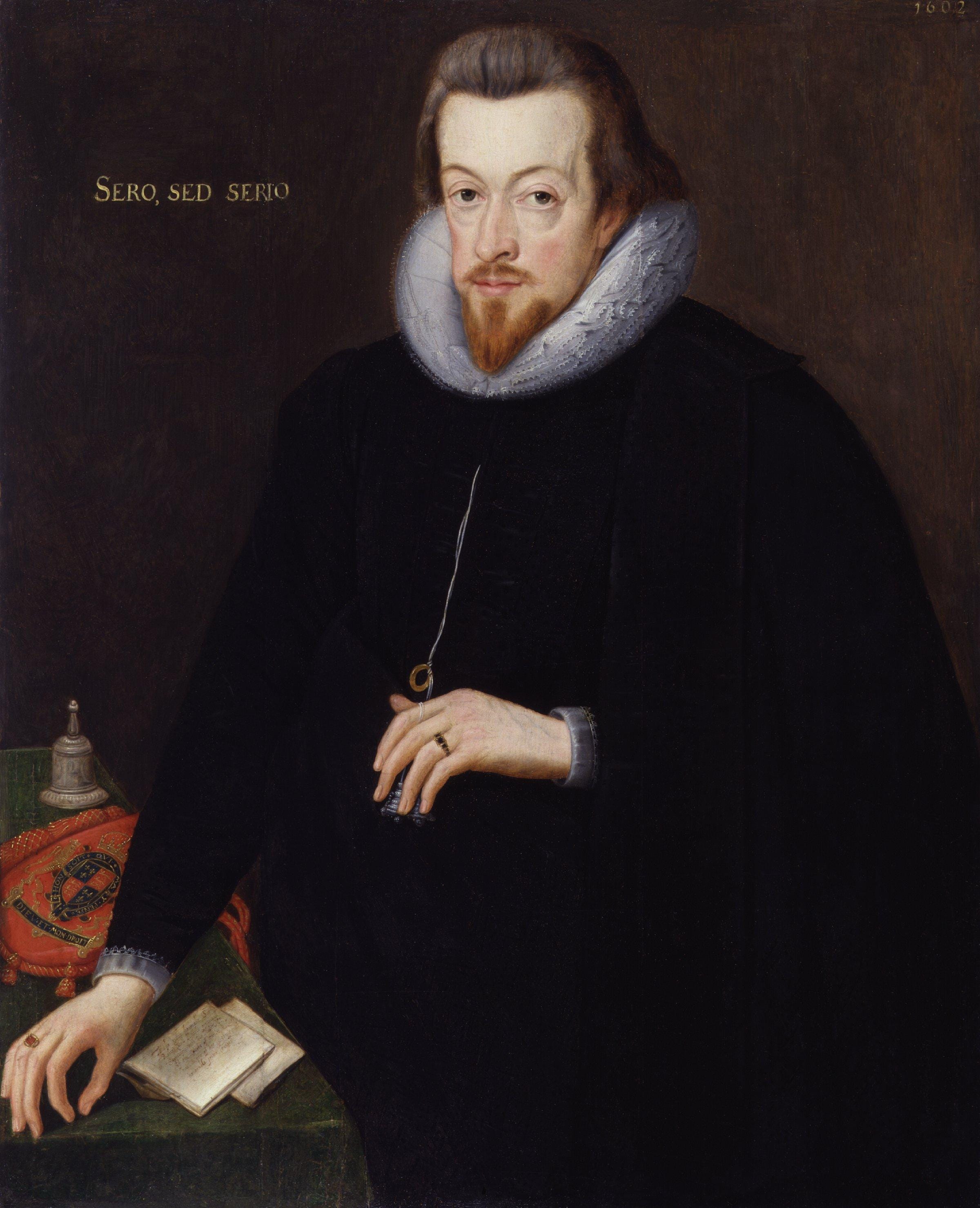
Public domain, painting by John de Critz the Elder, 1602
Without Cecil’s scheming, it is possible that James VI of Scotland would have never become James I of England, too. For years, Cecil, Robert Devereux 2nd Earl of Essex and Sir Walter Raleigh had been ‘frenemies’. But neither Essex nor Walter Raleigh were a match for the Machiavellian wirepuller Cecil who gathered them in or pushed them away at will.
In 1601, when Essex returned from the wars in Ireland, having failed to ‘tame the wild Irish’ as they said back in the day, Walter Raleigh was the first to criticise him. Cecil knew since Raleigh was Elizabeth’s favourite that all he had to do was sit back and wait for Essex – a highly volatile and paranoid man at this point – to explode outrageously. In a series of extremely ill-conceived actions, Essex thought he should be recognised once again into the Queen’s favour and unseat both Raleigh and Cecil – and if not – perhaps Elizabeth herself. Long story short, he failed.
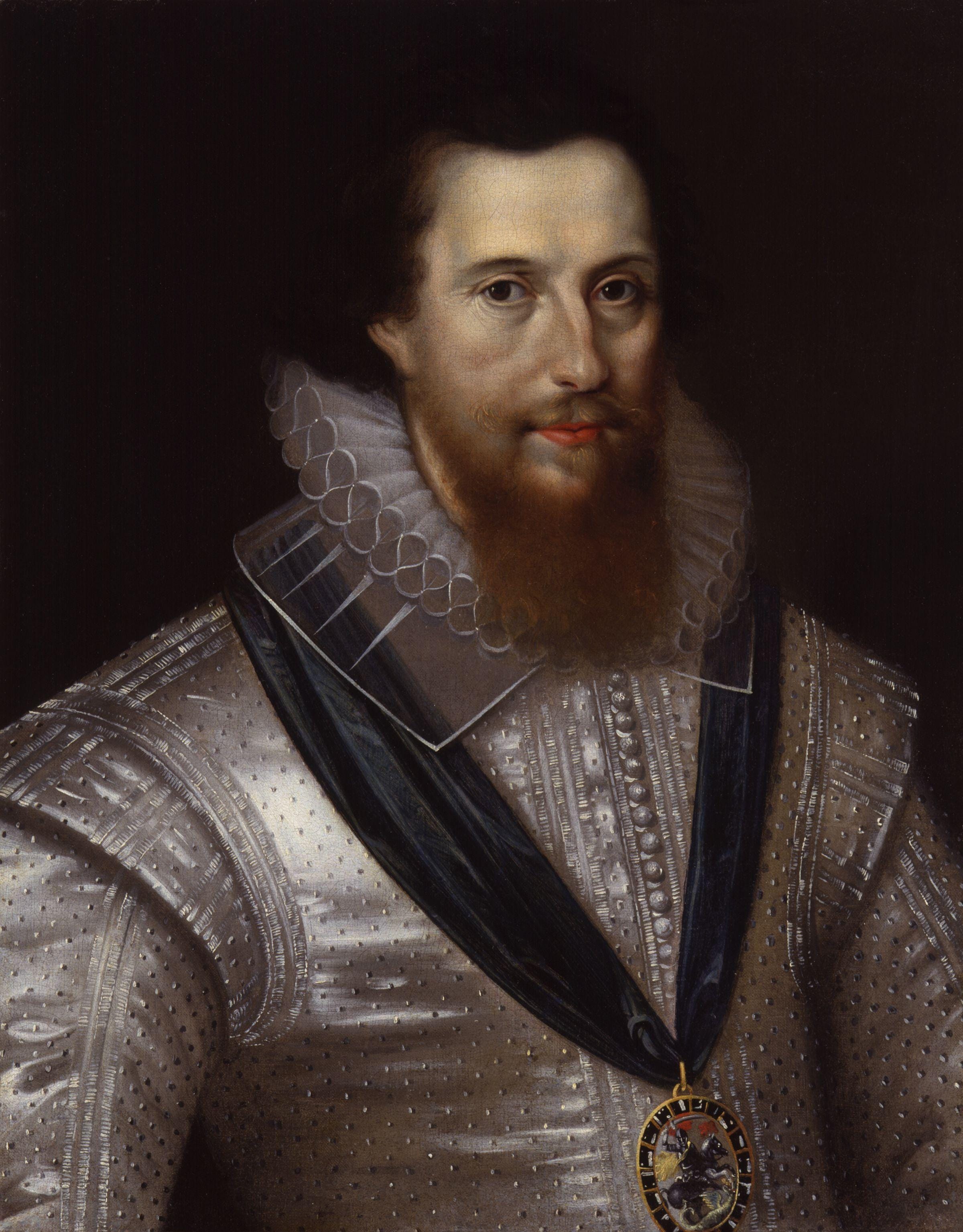
Public domain, After Marcus Gheeraerts the Elder, c. 1596
Essex House was the cauldron where other discontented lords and men stirred each other into a treasonous stew. Something, Essex declared, had to be done to stop Cecil and Raleigh from taking over the government. (Cecil would later undo Raleigh of course.) Among those who rebelled as Essex’s band of brothers included noblemen like the Earl of Southampton, Henry Wriothesley, theoretically Shakespeare’s only known patron. (Another story, so I won’t digress.)
To galvanise and inspire his troops, Sir Gelly Meyrick, Essex’s steward, approached The Lord Chamberlain’s Men at The Globe Theatre on Friday 6 February 1601 along with Lord Monteagle and Sir Charles Percy and ‘four others’ for a performance of Richard II to be staged the following afternoon.
The players hesitated. It was an old play, they said, and would not draw a large enough audience to make the performance worthwhile. Behind the scenes the main sharers (the Burbage brothers, Heminges, Condell and Shakespeare among them) must have objected to staging it. It was an old and tired play, Augustine Phillips (another sharer) told Essex’s men with a shrug. But their objections were soon overcome with the promise of a payment of 40 shillings above their usual takings.
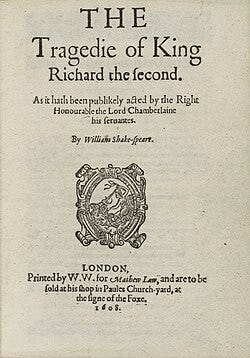
Public Domain, 1608 Quarto title page
And so, on that Saturday 7 February, the performance went ahead, and the next morning, Essex made his move. For some reason Essex had got it into his head that his return from Ireland and Wales was just like the epiphany that hit King Richard II – only it would have to be served on a playmaker’s platter to Elizabeth I. Shakespeare’s Richard II would be the perfect vehicle to energise his men. Sadly for Essex, his Sunday revolt in the City, an unnecessary tragedy of history, was too weak and feeble to be remembered as a failed coup d’état. Essex along with his other disgruntled aristocrats were thrown into the Tower.
An investigation ensued immediately. On 18 February, Augustine Phillips of the Lord Chamberlain’s Men drew the short straw and testified before Lord Chief Justice Popham. Justice Fenner recorded his testimony:
‘He saith that on Friday last was sennight or Thursday Sir Charles Percy Sir Josceline Percy and the Lord Mounteagle with some three more spoke to some of the players in the presence of this Examinate (meaning Phillips) to have the play of the deposing and killing of King Richard the Second to be played the Saturday next, promising to get them xl shillings more than their ordinary to play it. Where this Examinate and his fellows were determined to have played some other play, holding that the play of King Richard to be so old and so long out of use that they should have small or no company at it. But at their request this Examinate and his fellows were content to play it the Saturday and had their xl shillings more than their ordinary for it, and so played it accordingly.’ (State Papers Domestic, Elizabeth, vol. cclxxviii, 72, 78)
Elizabeth was furious, deeply wounded and uncomprehending. The parallel to King Richard II was clearly troubling, but she had to take heart that her people – most of whom had known no other monarch – did not join the rebellion. She would later remark to William Lambarde Keeper of the Records in the Tower, ‘I am Richard II, know ye not that?’
What possessed Essex to revolt against a queen he had faithfully served for years; a queen who was his champion since childhood and felt an obligation to him as the stepson of her one great love the Earl of Leicester? His reason was that both Cecil and Raleigh were conspiring against the queen and England itself to instal the Spanish Infanta on the throne once Elizabeth died. Elizabeth was in her 68th year, without an heir, and had categorically refused to name her successor. In fact, she went into fits of rage each time the succession was mentioned. As a younger woman she claimed she refused to name an heir because the Court always preferred ‘the rising rather than the setting sun’. Essex and his rebellious men were imprisoned in the Tower, tried, and eventually executed – except for the Earl of Southampton whose sentence was commuted to life imprisonment.
And The Lord Chamberlain’s Men? They were hardly fools. Essex’s discontent would have rumbled down the grapevine and certainly been conveyed in some way by the men commissioning the play. When Essex’s circle asked the most experienced theatre company in the land to revive that particular play – at virtually no notice – for money, they must have realised that it wasn’t for an innocent theatre-going experience. That said, no one, not even the conspirators themselves knew for certain what would occur on that fateful Sunday.
Augustine Phillips’s testimony was a fine and well-judged piece of silence, concentrating on the players’ reluctance and need to earn more than usual for the questionable performance. What is fascinating is that Shakespeare and all the other sharers recognised that knowing too much, or saying too much, or stepping into the public political arena could be fatal. They wisely remained in the shadows.
That Shakespeare remains a lingering shadowy figure in this sad episode as in so many others comes as no surprise. We do not even know if he was in London at the time. What we can safely assume is that he had lived long enough to say nothing. When he was nineteen, there was the Warwickshire case of a man called John Somerville which struck close to home. Somerville was a young Catholic who set off to London with the intent to shoot the Queen. In the aftermath Edward Arden of Park Hall – head of the senior branch of the family from which Shakespeare’s mother hailed, was executed over the matter.
For a man whose words continue to fill our hearts and minds five hundred years after his death, we can barely trace Shakespeare’s footprints in the sands of history. . . other than in his business dealings, property ownership, lawsuits and tax arrears that is. Even when he was compelled to testify in the Bellott-Mountjoy lawsuit of 1612, all he says is he cannot remember.
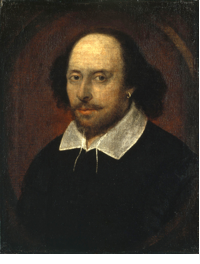
Public domain, ‘Chandos’ Portrait in the National Portrait Gallery
Thankfully, Her Majesty Queen Elizabeth requested The Lord Chamberlain’s Men to play at Court on 24 February 1601 on the eve before the Earl of Essex’s execution, drawing a line under any suggestion that the players were involved in the Essex plot. It paid to have the powerful Lord Chamberlain as their patron.
You may wonder what play they performed. Surely not a comedy or a history. . . sadly that, too, was not recorded. Sigh.